
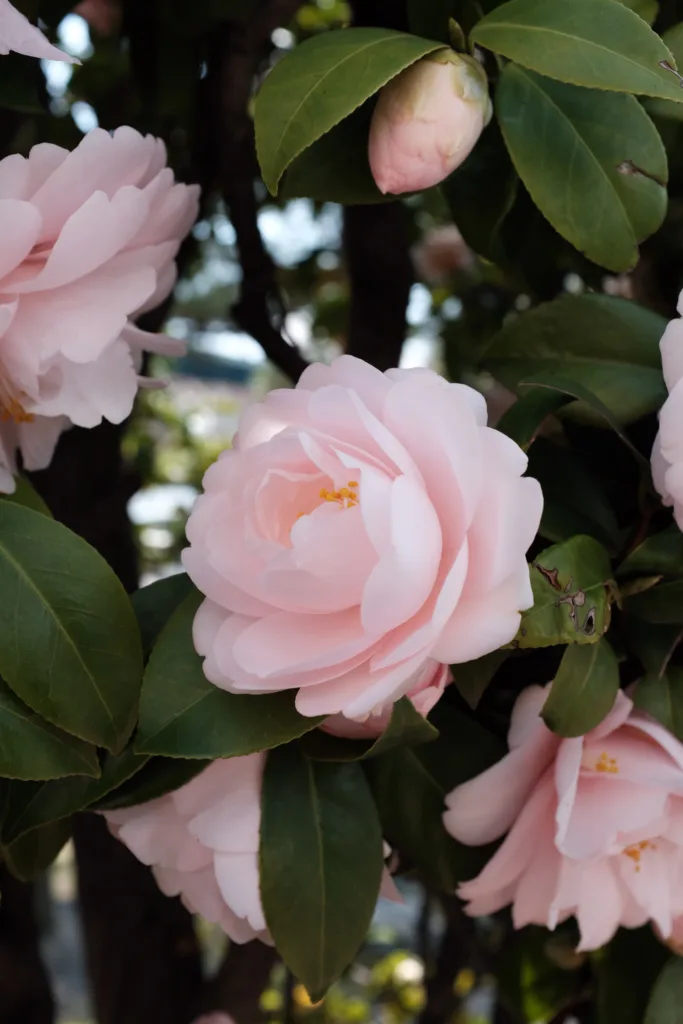
Camellias are elegant, evergreen shrubs known for their stunning blooms and glossy foliage. These beautiful plants can add a touch of sophistication to any garden. To ensure your camellia thrives, it’s essential to understand its needs and provide the right care. This post covers everything you need to know about Camellia plant care from soil type, light requirements, water needs, fertilizer, pest control, pruning, and propagating camellias.
Choosing the Right Soil
Camellias prefer well-drained, acidic soil with a pH between 5.5 and 6.5. You can test your soil using a home testing kit available at most garden centers. If your soil is too alkaline, you can lower the pH by adding organic matter like peat moss or pine needles. This not only improves the soil structure but also provides essential nutrients. Good drainage is essential to prevent root rot, so consider planting your camellia in a raised bed if your garden soil is heavy clay.
Light Requirements
Next, consider the light requirements. Camellias thrive in partial shade, ideally receiving morning sun and afternoon shade. Too much direct sunlight can cause leaf scorch and reduce blooming. However, in cooler climates, camellias can tolerate more sun. Planting your camellia in a location with dappled light or filtered shade ensures healthy growth and abundant blooms.
Watering Needs
Watering is another critical aspect of camellia care. These shrubs prefer consistently moist soil but do not tolerate waterlogged conditions. Water your camellia deeply and regularly, especially during dry periods. The soil should remain evenly moist, but not soggy. Mulching around the base of the plants helps retain moisture and regulate soil temperature. Use organic mulch, such as pine bark or wood chips, to maintain soil acidity.
Fertilizing Your Camellia
Fertilizing your camellia provides essential nutrients for growth and blooming. Use a fertilizer specifically formulated for acid-loving plants, such as a 10-10-10 or 12-6-6 formula. Apply the fertilizer in early spring, just as new growth begins, and again in late summer. Follow the instructions on the fertilizer package to avoid over-fertilizing, which can damage the plants. Additionally, incorporating organic matter into the soil can provide long-term nutrition and improve soil health.
Pest Control
Pest control is vital for maintaining healthy camellias. Common pests include aphids, scale insects, and spider mites. Regularly inspect your plants for signs of infestation, such as discolored leaves, sticky residue, or webbing. If you notice any pests, take action immediately. Use horticultural oil or insecticidal soap to treat minor infestations. Keeping your camellia healthy through proper watering and fertilization can also make it less susceptible to pests.
Pruning Your Camellia
Pruning is essential for maintaining the shape and health of your camellia. The best time to prune is in late winter or early spring after the blooming period. Start by removing any dead or diseased branches. Next, trim back any branches that are crossing or rubbing against each other. This not only improves the plant’s appearance but also allows better air circulation, reducing the risk of fungal diseases. Use clean, sharp pruning tools to make precise cuts and avoid damaging the plant.
Protecting Against Disease
In addition to pests, camellias are susceptible to several diseases, such as root rot, petal blight, and leaf gall. To protect your plants, practice good sanitation by removing fallen leaves and spent flowers from around the base. This minimizes the chance of disease spores overwintering and re-infecting the plants in the spring. If you notice signs of disease, such as discolored or wilting leaves, treat the plants with an appropriate fungicide. Always follow the manufacturer’s instructions for application rates and timing.
Propagating Camellias
Propagating camellias can be a rewarding way to expand your garden. The most common methods are through cuttings or grafting. For cuttings, take a 4-6 inch piece of semi-hardwood stem in late summer. Remove the lower leaves and dip the cut end in rooting hormone. Plant the cutting in a pot filled with a mix of peat moss and perlite. Keep the cutting in a warm, humid environment with indirect light and mist it regularly to maintain moisture. Roots should develop in a few months, and the cutting can then be transplanted into the garden. For grafting, select a healthy rootstock and a scion from a desired camellia variety. Join the two with a clean, precise cut and secure them together. Keep the grafted plant in a controlled environment until it heals and shows new growth.
Happy Gardening
Caring for camellias requires attention to detail and regular maintenance, but the rewards are well worth the effort. By providing the right soil, light, water, and nutrients, and by protecting the plants from pests and diseases, you can enjoy the beauty of healthy, blooming camellias for many years. Remember, consistent care is key to thriving camellias.
Please be sure to check out my Gardening Blog Post Page for more tips on all types of gardening. Including Seed Starting, Orchids, Water Gardening, Coldframe Gardening, Indoor Bulb Gardening, Hydroponics, Container Gardening, Mums, Herbs, African Violets, planting Bulbs, Flower Gardening, Vegetable and Fruit Gardening, Indoor Houseplants of all kinds, Cactus, Succulents, Hanging plants, Deer resistant plants and even Bird, Bee, Butterfly and Hummingbird Gardens!