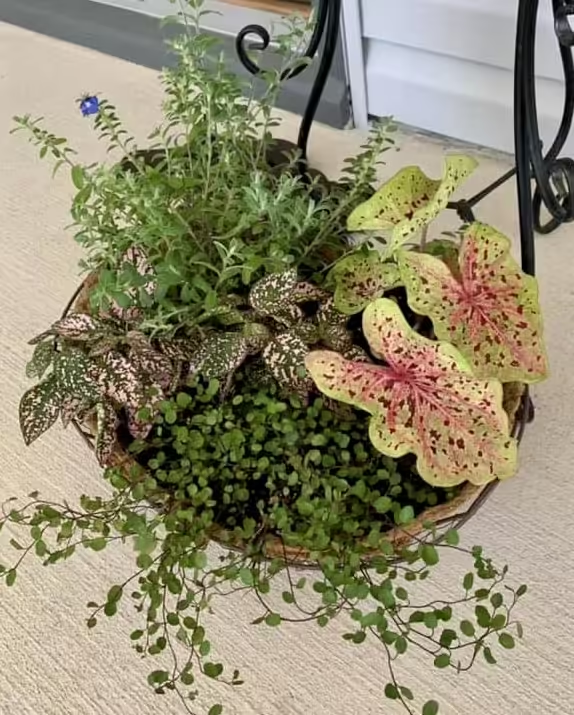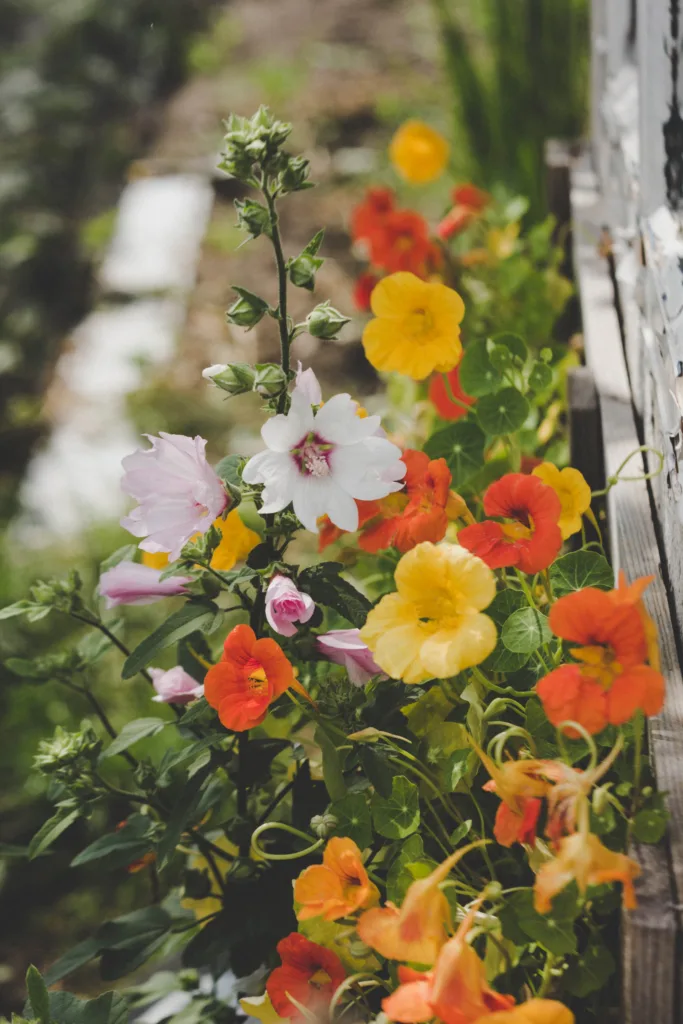
Red and yellow flowers bring energy and warmth to any garden, especially when arranged in window boxes, pots, or hanging baskets. These vibrant colors make a bold statement, drawing attention and creating a lively atmosphere. When you combine red and yellow flowers, you can create stunning visual effects that brighten up any space, whether it’s your patio, balcony, or garden bed. In this post, we will explore various red and yellow flower planter ideas and provide tips on how to plant and care for them to keep your garden looking vibrant all season long.
Red and Yellow Flower Planter Combinations for Window Boxes, Pots, and Hanging Baskets
When planning your container garden, mixing red and yellow flowers creates dynamic and eye-catching arrangements. These combinations work beautifully in window boxes, pots, or hanging baskets, and you can experiment with different textures and trailing plants to add depth and interest.
Combination 1: Fuchsia, Yellow Nasturtiums, and Lotus Berthelotii
This combination offers a delightful mix of bright colors and trailing elements, perfect for hanging baskets or window boxes. Fuchsia brings a vibrant red color with its pendulous blooms, while yellow nasturtiums add a pop of cheerful yellow. Lotus berthelotii, with its feathery foliage and cascading habit, ties the arrangement together with a soft, trailing effect.
To plant this combination, start by choosing a container with good drainage. Fill it with a high-quality potting mix, leaving a few inches of space at the top. Plant the fuchsia in the center of the pot for height, then add yellow nasturtiums around it. Finally, plant the lotus berthelotii along the edges to allow it to spill over the sides. This combination thrives in partial shade to full sun, so place your container in a spot that receives a mix of light. Water regularly, keeping the soil consistently moist, but avoid waterlogging. Fertilize every two to four weeks for continuous blooming.
Combination 2: Strawberries, Red Petunias, and Helichrysum Variegated
For a unique twist, try mixing fruit and flowers in a single pot. Strawberries not only provide sweet treats but also add a touch of red to your arrangement. Pair them with red petunias for a burst of color and helichrysum variegated for a touch of silver foliage that adds contrast.
To plant this combination, choose a large container or window box with good drainage. Fill it with potting mix and plant the strawberries at the back of the container, where they can grow and spread. Add the red petunias in front of the strawberries, and plant helichrysum variegated along the edges for a cascading effect. This combination thrives in full sun, so make sure your container receives plenty of light. Water regularly, especially during hot weather, and fertilize every few weeks to encourage healthy growth and fruit production.
Combination 3: Red Geraniums, Yellow Nasturtiums, Red Verbena, and Variegated Ivy
For a full and lush arrangement, combine red geraniums, yellow nasturtiums, red verbena, and variegated ivy. This combination mixes upright plants with trailing elements, creating a balanced and visually appealing display. Red geraniums and verbena provide bold color, while yellow nasturtiums add a cheerful contrast. Variegated ivy brings a touch of green and white, softening the overall look.
To plant this combination, select a large pot or window box with good drainage. Fill it with potting mix and plant the red geraniums toward the back of the container for height. Add red verbena in the middle, then plant yellow nasturtiums along the edges. Finally, plant variegated ivy around the perimeter so that it can trail over the sides. This combination thrives in full sun to partial shade, so place your container accordingly. Water regularly, keeping the soil evenly moist, and fertilize every two to four weeks to keep the blooms coming.
Combination 4: Yellow and Red Vining Nasturtiums and Verbena
For a simple yet striking display, consider planting a combination of yellow and red vining nasturtiums with verbena. This combination creates a cascading effect that works well in hanging baskets or window boxes. The bright yellow and red nasturtiums offer a bold contrast, while verbena adds texture with its small clusters of flowers.
To plant this combination, choose a hanging basket or window box with good drainage. Fill it with potting mix and plant the yellow and red vining nasturtiums evenly throughout the container. Add verbena around the nasturtiums to fill in any gaps. This combination thrives in full sun, so place your container in a sunny spot. Water regularly, and deadhead spent blooms to encourage continuous flowering throughout the season.
Combination 5: Red Geraniums, Lysimachia Nummularia, and Mimulus
For a mix of color and texture, try combining red geraniums, lysimachia nummularia (creeping Jenny), and mimulus (monkey flower). Red geraniums provide bold, upright blooms, while lysimachia nummularia offers a trailing effect with its bright green foliage. Mimulus adds a touch of whimsy with its colorful, spotted flowers, which come in shades of yellow and red.
To plant this combination, choose a pot or hanging basket with good drainage. Fill it with potting mix and plant the red geraniums in the center for height. Add lysimachia nummularia around the edges for trailing, and plant mimulus in between the geraniums and lysimachia. This combination prefers full sun to partial shade, so place your container accordingly. Water regularly, and fertilize every few weeks to keep the plants healthy and blooming.
Combination 6: Coreopsis with Red and Yellow Vining Nasturtiums
For a cheerful and colorful display, try combining coreopsis with red and yellow vining nasturtiums. Coreopsis offers bright yellow daisy-like flowers, while red and yellow nasturtiums add a trailing element and complementary color.
To plant this combination, select a container with good drainage and fill it with potting mix. Plant the coreopsis in the center for height, then add red and yellow vining nasturtiums around the edges. This combination thrives in full sun, so place your container in a bright location. Water regularly and deadhead spent blooms to keep the flowers blooming throughout the season.
Combination 7: Yellow and Red Miniature Roses with Vining Ivy
For a romantic and elegant look, combine yellow and red miniature roses with vining ivy. Miniature roses offer delicate, fragrant blooms, while ivy adds a trailing element that softens the arrangement.
To create this look, choose a container with good drainage and fill it with potting mix. Plant the miniature roses in the center, spacing them evenly. Add vining ivy around the edges of the container to create a cascading effect. This combination prefers full sun to partial shade, so place your container in a location that receives plenty of light. Water regularly and fertilize every few weeks to keep your roses blooming.
Combination 8: Tumbling Yellow Display with Parsley, Yellow Violas, and Gold Coin Asteriscus
For a sunny and cheerful display, consider planting a combination of parsley, yellow violas, and gold coin asteriscus. Parsley adds a touch of green and texture, while yellow violas and gold coin asteriscus provide bright, sunny blooms.
To plant this combination, select a container with good drainage and fill it with potting mix. Plant the parsley in the center for height, then add yellow violas and gold coin asteriscus around the edges. This combination thrives in full sun to partial shade, so place your container accordingly. Water regularly and fertilize every few weeks to keep the plants healthy and blooming.
Combination 9: Yellow Daisy, White Bacopa, and Yellow Violas for an All-Yellow Pot
For a monochromatic look, try creating an all-yellow pot with yellow daisy, white bacopa, and yellow violas. This combination offers a mix of textures and sizes, creating a visually interesting display.
To plant this combination, choose a container with good drainage and fill it with potting mix. Plant the yellow daisy in the center for height, then add yellow violas around the daisy. Finally, plant white bacopa along the edges for a trailing effect. This combination prefers full sun to partial shade, so place your container in a bright location. Water regularly and deadhead spent blooms to encourage continuous flowering.
Combination 10: Marigolds, Yellow Lantana, and Bidens Ferulifolia
For a bold and colorful display, consider planting a combination of marigolds, yellow lantana, and bidens ferulifolia. Marigolds and yellow lantana offer bright, sunny blooms, while bidens ferulifolia adds a trailing element with its delicate, fern-like foliage.
To plant this combination, select a container with good drainage and fill it with potting mix. Plant the marigolds and yellow lantana in the center for height, then add bidens ferulifolia along the edges for a cascading effect. This combination thrives in full sun, so place your container in a bright location. Water regularly and fertilize every few weeks to keep the plants healthy and blooming.
Happy Container Gardening
Red and yellow flowers create stunning displays in window boxes, pots, and hanging baskets. By combining different textures, heights, and trailing elements, you can create vibrant arrangements that brighten up your outdoor space. Whether you prefer a simple combination or a full, lush display, these red and yellow flower combinations will bring energy and warmth to your garden. With proper care, regular watering, and fertilizing, your container garden will thrive all season long, adding beauty and charm to your home.
Please be sure to check out my Gardening Blog Post Page for more tips on all types of gardening. Including Seed Starting, Orchids, Water Gardening, Coldframe Gardening, Indoor Bulb Gardening, Hydroponics, Container Gardening, Mums, Herbs, African Violets, planting Bulbs, Flower Gardening, Vegetable and Fruit Gardening, Indoor Houseplants of all kinds, Cactus, Succulents, Hanging plants, Deer resistant plants and even Bird, Bee, Butterfly and Hummingbird Gardens!