
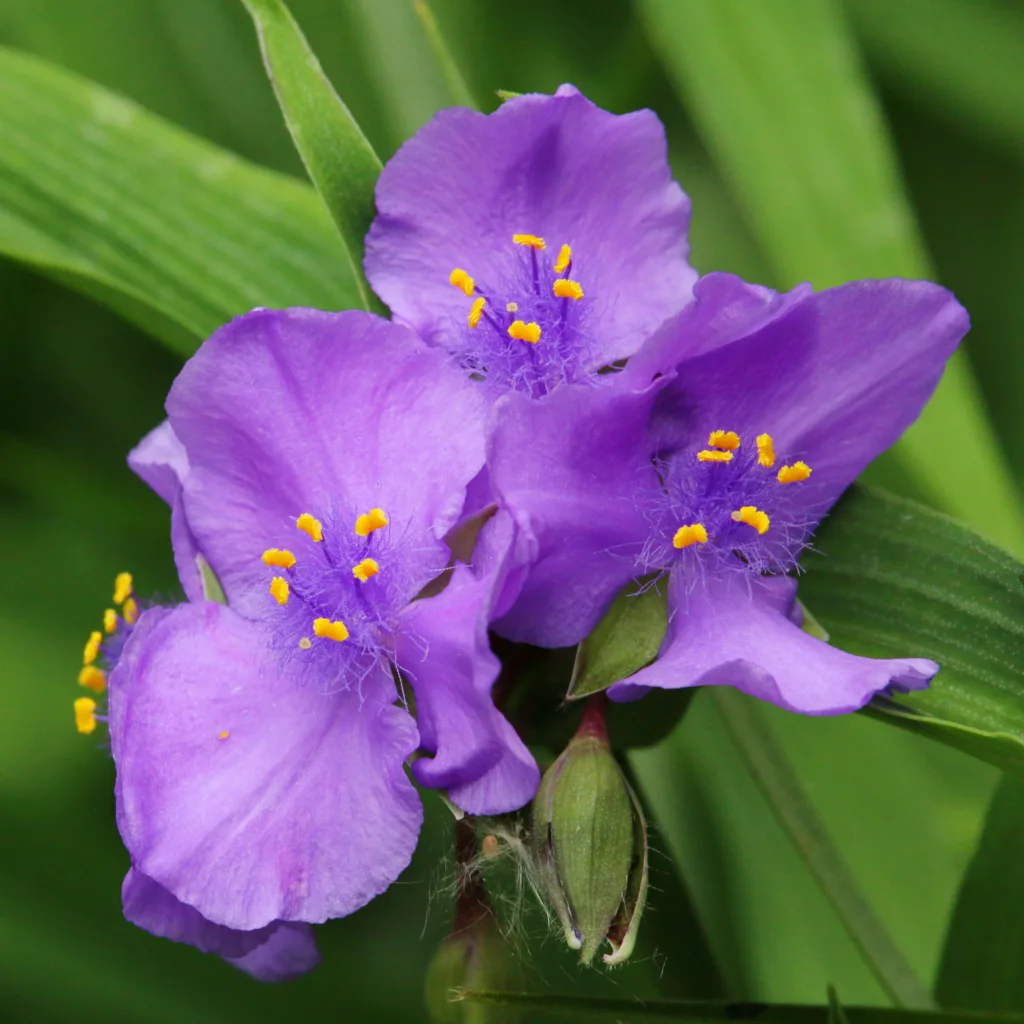
Spiderwort is a hardy and beautiful perennial known for its striking flowers and ease of care. Perfect for both beginners and seasoned gardeners, this plant adds a splash of color to any garden. In this post, we’ll cover how to grow spiderwort, focusing on its adaptability to clay soil, light requirements, watering, fertilizing, pest control, pruning, and propagation.
Thriving in Clay Soil
Spiderwort thrives in clay soil due to its ability to retain moisture and nutrients. To improve drainage and prevent waterlogging, incorporate organic matter like compost or well-rotted manure into the soil. This not only enhances soil structure but also provides essential nutrients. If your soil is too compacted, consider loosening it with a garden fork before planting.
Light Requirements
Spiderwort is quite versatile in terms of light needs. It grows well in both full sun and partial shade. However, in hotter climates, providing some afternoon shade can help prevent leaf scorching. Adequate sunlight ensures vibrant blooms and healthy foliage, so choose a spot in your garden that receives ample light.
Watering Needs
Proper watering is essential for spiderwort to flourish. While it prefers consistently moist soil, it is important not to overwater. Allow the top inch of soil to dry out between waterings to prevent root rot. During dry spells, increase watering frequency to maintain moisture levels. Mulching around the plant base can help retain moisture and regulate soil temperature.
Fertilization
Fertilizing spiderwort supports vigorous growth and abundant flowering. In early spring, apply a balanced, slow-release fertilizer with equal parts nitrogen, phosphorus, and potassium. This provides a steady supply of nutrients throughout the growing season. Be careful not to over-fertilize, as this can lead to lush foliage at the expense of flowers.
Pruning for Health and Shape
Pruning spiderwort keeps it looking tidy and encourages reblooming. After the initial bloom, cut back spent flower stems to promote new growth. Removing dead or damaged leaves improves air circulation and reduces the risk of disease. In late fall, trim the plant back to ground level to prepare it for winter dormancy.
Pest Control
Spiderwort is relatively pest-resistant, but occasional issues may arise. Common pests include aphids and spider mites. Use insecticidal soap or neem oil to control these pests naturally. Regularly inspecting your plants for signs of infestation can help catch problems early. Maintaining a clean garden reduces hiding spots for pests and minimizes infestations.
How To Propagate Spiderwort
Propagating spiderwort is easy and can be done through division or cuttings.
Division: In early spring or late fall, dig up a mature plant and carefully separate the root ball into smaller sections, ensuring each has healthy roots and shoots. Replant the divisions immediately, spacing them adequately to allow for growth.
Cuttings: Take cuttings in early summer from healthy stems. Cut a 4-6 inch section just below a node, remove the lower leaves, and dip the end in rooting hormone. Plant the cutting in a pot with a well-draining mix and keep it moist in a bright, sheltered location. Once roots develop, transplant it into your garden.
Happy Gardening
Growing spiderwort can transform your garden with its vibrant flowers and lush foliage. By understanding its needs and providing the right conditions, you can enjoy a thriving, beautiful display. With proper care, including attention to soil, light, water, and maintenance, your spiderwort will flourish, adding beauty and charm to your outdoor space.
Please be sure to check out my Gardening Blog Post Page for more tips on all types of gardening. Including Seed Starting, Orchids, Water Gardening, Coldframe Gardening, Indoor Bulb Gardening, Hydroponics, Container Gardening, Mums, Herbs, African Violets, planting Bulbs, Flower Gardening, Vegetable and Fruit Gardening, Indoor Houseplants of all kinds, Cactus, Succulents, Hanging plants, Deer resistant plants and even Bird, Bee, Butterfly and Hummingbird Gardens!