
Fertilizer, Temperature and Humidity Levels
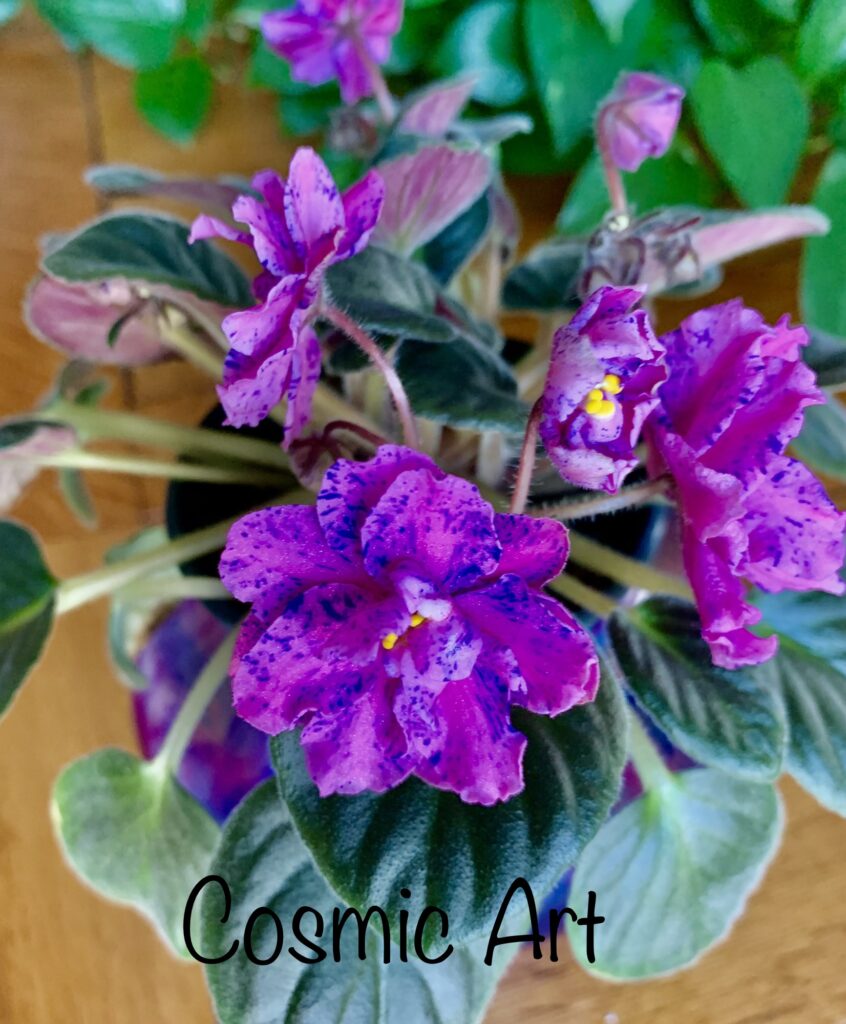
African Violets are beautiful, delicate plants that can be a challenge to care for. Adequate fertilizers, humidity, and temperature are essential. While many people love the look of African Violets, few are aware of their specific needs. But with the right care and attention, your African Violets can thrive and bloom for years to come. In this blog, we will share tips on African Violet Care including fertilizers and the perfect temperature and humidity levels for their growth.
African Violet Care – Liquid Fertilizer
When feeding your African Violets, liquid fertilizer is often the best choice. Liquid fertilizers are easily absorbed by the plant, providing essential nutrients needed for optimum growth. Fertilizers specifically designed for African Violets usually contain the right balance of nitrogen, phosphorous, and potassium, which are critical for plant health. I use the Schultz Brand of liquid African Violet fertilizer, have tried a few others but seem to get the best results with Schultz. You should try them all and do what works best for you and your African Violets.
To use liquid fertilizer, start by diluting it according to the package instructions. Over-fertilizing can be harmful, so it’s important to get the concentration right. I use AV fertilizer with my weekly watering, I use it full strength one week and half strength the next week. This has kept my African Violets happy and healthy and blooming continuously. Remember to do what works best for your violets.
African Violet Care – Temperature and How to Regulate
African Violets thrive in a relatively warm environment, with the ideal temperature range being between 70 to 80 degrees Fahrenheit during the day, and slightly cooler at night, between 65 to 70 degrees. They are sensitive to extreme temperature variations, so maintaining a stable temperature is crucial for their health and blooming. I like this small hygrometer-measure both humidity and temperature.
To control the temperature, firstly, keep your African Violets away from drafty windows or doors and avoid placing them near heating or cooling vents. Direct contact with cold or hot air can lead to leaf damage and inhibit blooming. Secondly, use a thermostat to monitor the room temperature where your African Violets are. If you live in a cooler climate, you might consider a heating mat for plants, which can be placed under the pot to provide a consistent warmth. Remember, consistency is key when it comes to temperature control for your African Violets.
African Violet Care – Humidity Levels and How to Adjust
African Violets do well in moderate to high humidity levels, ideally around 40% to 60%. Low humidity can lead to wilting and dry soil, while high humidity might encourage the growth of mold or other diseases. It’s a delicate balance that needs to be maintained.
To control the humidity levels for your African Violets, investing in a good quality humidifier can be a great help, specifically in dry climates or during the winter months when indoor air tends to be drier. Also, placing your pot on a tray of water with pebbles can increase the surrounding humidity as the water evaporates. It’s important to note that the pot should sit on the pebbles, not in the water, to avoid waterlogging the roots.
Furthermore, a hygrometer, a device used to measure humidity, can be used to monitor the humidity levels in the room where your African Violets are placed. Regular monitoring and adjustments will help ensure your African Violets enjoy the perfect level of humidity and stay vibrant and healthy. Remember, consistency is crucial when it comes to maintaining the right humidity conditions for your African Violets.
Happy Gardening!
African Violets are beautiful and rewarding to care for, but they require some specific care to thrive. Fertilizer with balanced nutrient ratios, the right temperature and humidity, lighting, and proper watering and repotting techniques will help keep your African Violets happy and healthy. By following these suggestions, you will enjoy the beauty of African Violets in your home and garden for years to come.
Please be sure to check out my Gardening Blog Post Page for more tips on all types of gardening. Including Seed Saving, Seed Starting, Orchids, Water Gardening, Coldframe Gardening, Indoor Bulb Gardening, Hydroponics, Container Gardening, Mums, Herbs, African Violets, planting Bulbs, Flower Gardening, Vegetable and Fruit Gardening, Indoor Houseplants of all kinds, Cactus, Succulents, Hanging plants, Deer resistant plants and even Bird, Bee, Butterfly and Hummingbird Gardens!