
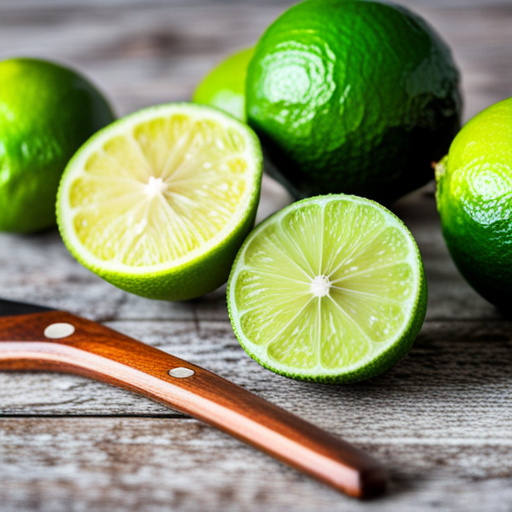
Growing lime trees is a great way to add a citrusy flavor to your garden and cuisine. Lime brings a unique taste to dishes, and the smell of a healthy lime tree is naturally refreshing. However, taking care of your lime tree might require your time and skills, but the end product is worth it. In this post, I will guide you through how to grow a lime tree successfully.
Zone Type
The first thing to consider when planning to grow a lime tree is your geographical location, specifically, your USDA hardiness zone. Lime trees thrive best in USDA hardiness zones 9 and 10, where temperatures rarely drop below 20 degrees Fahrenheit. These subtropical and tropical plants are sensitive to cold and frost, which can harm or even kill the tree. So, it’s vital to assess your zone before planting, or you may need to grow your lime tree in a container and bring it indoors during colder months.
How to Plant a Lime Tree
To plant a lime tree, start by selecting a sunny location as they need 6-7 hours of sunlight a day with well-draining soil with a pH range between 6 and 7.5. The lime tree also grows best in loamy soils, where its roots can develop more extensively. You can also add aged manure or compost for extra nutrients and improve the soil texture.
If you’re planting directly in the ground, dig a hole twice as wide and just as deep as your lime tree’s root ball. Place the tree in the hole, making sure that the top of the root ball is level with the surface of the ground. Backfill the hole with soil, pressing firmly to remove any air pockets. For the first few weeks, keep the soil consistently moist, but not waterlogged. Add a layer of mulch around the base of the tree to help retain moisture and suppress weeds.
How Much Sun Does a Lime Tree Need?
Lime trees thrive best when they are exposed to full sunlight for at least six to seven hours each day. They love the heat and are adaptable to various light conditions, but they perform optimally under direct, unfiltered sunlight. Adequate exposure to sunlight not only contributes to their lush, green foliage but also promotes better blossom and fruit production. Consequently, selecting a location with plenty of natural light for your lime tree can significantly enhance its overall health and yield. For indoor lime trees or those in colder climates, using a grow light during winter can help meet their light requirements.
How to Care for a Lime Tree
Caring for a lime tree involves attentive water management, feeding, and protection. Lime trees need regular watering to thrive. However, over-watering can lead to root rot, so it’s essential to allow the soil to dry slightly between watering. As for feeding, citrus trees are heavy feeders and respond well to frequent fertilization. Use a slow-release, balanced fertilizer, such as a 10-10-10, and apply according to the package instructions throughout the growing season. Pruning should be done to remove dead or diseased branches, promote air circulation, and shape the tree. Lastly, lime trees may need protection from pests such as aphids, citrus leaf miners, and scale insects. Monitor your tree regularly for signs of pests and treat any problems promptly with an appropriate insecticide.
How Big do Lime Trees Get?
Lime trees can vary in size depending on the specific variety, but typically, they can grow to heights of about 10 to 15 feet when matured. However, dwarf lime tree varieties, which are suitable for container growing, usually reach around 4 to 6 feet in height. It’s important to note that the size of a lime tree can be influenced by factors such as soil quality, sunlight exposure, and proper care. Adequate space should be provided for the tree to grow to its full potential, considering both its height and width.
How to Grow a Lime Tree in a Container
Growing a lime tree in a container is a fantastic option for those residing in colder climates or with limited garden space. To start your container growing journey, select a suitable pot, ensuring it has adequate drainage holes. The container should be large enough to accommodate the mature size of the tree. Dwarf varieties are highly recommended for container planting.
Fill the pot with a well-draining, loamy soil mix with a slightly acidic pH. You can create an appropriate mix by combining equal parts potting soil, peat moss, and perlite or coarse sand. Position the tree in the center of the container, ensuring the top of the root ball is level with the top of the soil.
Care for your container-grown lime tree as you would a garden-planted tree. Regular watering is crucial, but avoid waterlogging the soil. Allow the surface to dry out slightly between watering intervals. Use a slow-release, balanced fertilizer and apply according to the package instructions.
Remember to position your container where it will receive a minimum of 6-7 hours of direct sunlight daily. During winter or in less sunny climates, place your tree under a grow light to meet its light requirements. Regular pruning will help maintain a manageable size and promote a healthy, bushy growth.
Finally, keep in mind that pot-grown trees may need to be repotted every few years as they outgrow their containers. Always monitor your tree for signs of pests or disease and treat promptly as needed. With proper care, your potted lime tree can thrive and produce a bountiful lime harvest even in the smallest of spaces.
Harvesting your Limes
Once your lime tree starts producing fruit, it’s time to harvest them. Limes are ripe when they turn green and soft. A ripe lime should also give slightly when you squeeze them. Use sharp scissors or a knife to clip the fruit from the tree. Avoid pulling them directly from the branch, as it can damage other fruit still attached to it. Limes can be stored in the fridge for 2-3 weeks.
Different Types of Lime Trees and their Features
There are several types of lime trees, each offering unique characteristics and adapted to certain growing conditions.
Persian Lime (Citrus x latifolia)
Also known as the Tahiti lime or Bearss lime, this is one of the most common lime trees grown commercially. The Persian lime tree bears seedless fruits, making it a popular choice for culinary use. It’s a hardy variety that can adapt to various soil conditions, though it prefers well-draining, sandy soils. The Persian lime tree grows best in USDA Hardiness Zones 9-11.
Key Lime (Citrus x aurantiifolia)
Often called the Mexican or West Indian lime, the Key lime is a smaller tree with thorny branches and small, round fruits. Known for their distinctive, tart flavor, Key lime fruits are favored in key lime pie and other dishes. The Key lime tree thrives in humid climates and is more cold-sensitive compared to other lime varieties, doing best in USDA Zones 10-11.
Kaffir Lime (Citrus hystrix)
The Kaffir lime tree, also known as the makrut lime, is renowned for its double-lobed leaves that are widely used in Thai and Indonesian cuisine. The fruit is small, round, and features a bumpy surface. It’s primarily grown for its aromatic leaves and rind rather than the fruit. The Kaffir lime tree prefers a sunny, well-drained location and grows ideally in USDA Zones 10-11.
Finger Lime (Citrus australasica)
Native to Australia, the Finger lime tree produces elongated, finger-shaped fruits filled with caviar-like vesicles. The fruits display a range of colors from green to deep red. The Finger lime tree is more cold-hardy than other lime varieties and can withstand temperatures as low as 20°F, making it suitable for USDA Zones 8-11.
Remember, no matter the type of lime tree you choose, providing adequate light, temperature, and soil conditions is key to a healthy, fruit-bearing tree. Each of these lime varieties can be grown in a container, making it possible to cultivate your own lime tree no matter where you live.
Happy Gardening!
Growing lime trees requires some effort, but the delicious fruit they produce is worth every drop of sweat. Remember to plant your trees in well-draining soil and to check the moisture levels regularly. Provide enough sunlight and shade and fertilize your lime tree sparingly. Once your limes are ripe, harvest them carefully and store them appropriately, so you can taste them whenever your taste buds crave some zest. With these basic tips, you’ll soon be enjoying fresh limes from your own garden.
Please be sure to check out my Gardening Blog Post Page for more tips on all types of gardening. Including Seed Saving, Seed Starting, Orchids, Water Gardening, Coldframe Gardening, Indoor Bulb Gardening, Hydroponics, Container Gardening, Mums, Herbs, African Violets, planting Bulbs, Flower Gardening, Vegetable and Fruit Gardening, Indoor Houseplants of all kinds, Cactus, Succulents, Hanging plants, Deer resistant plants and even Bird, Bee, Butterfly and Hummingbird Gardens!