

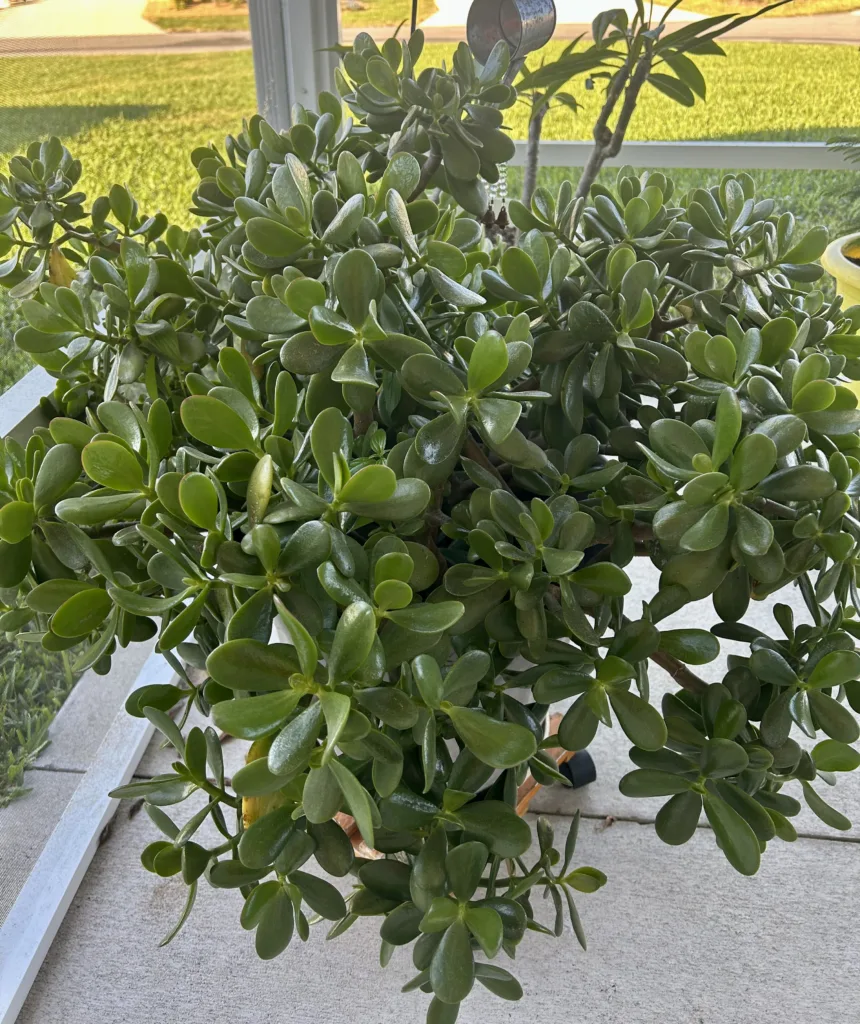
The Jade Plant is known for its longevity, and are known for their symbolization of luck and fortune! Some plants are believed to be hundreds of years old. Its tough leaves can survive in low light levels and neglectful watering. It is Crassula ovata and it is a succulent native to South Africa. It grows in a variety of shapes, from small shrubs to long-stemmed trees. The leaves are thick and fleshy with a glossy surface that reflects light. The green color ranges from bright emerald to dark forest green depending on the amount of sunlight received. The flowers are small and star-shaped, typically a white or pink color.
Jade Plant
If you’re a gardener looking for an eye-catching succulent that can survive occasional neglect, the jade plant (Crassula ovata) is sure to fit the bill perfectly. With its ease of maintenance, it’s easy to see why this hardy little houseplant has become so popular among gardeners. In fact, its longevity as a potted plant has made it one of the classic staples in nearly every home with a green thumb! Whether you’re just starting out on your gardening journey or have had plenty of experience along the way, caring for a jade plant is relatively straightforward. Here’s what you need to know about properly taking care of your new leafy friend.
Jade Plant Soil Requirements
Knowing the soil requirements for your jade plant is key to a healthy, long-living plant. To ensure proper growth, the soil should be slightly acidic and have good drainage. The ideal pH for is between 6 and 7. Soils with an unrealistic pH level will stunt their development and lead to slow growth. I planted my monster jade above in this miracle grow potting soil with some sand added and it seems to love it! This was in a 3″ pot off the half dead shelf at the local garden center and cost me a whole dollar! Adding sand or pumice to your potting mix can also assist with drainage as waterlogging can be detrimental to the health of your succulent. Depending on your climate and environment, adjust your soil accordingly with small amounts of fertilizer. Give the jade plant adequate amount of sunlight while avoiding exposure to extreme temperatures either way. With diligent care, jade plants can live many years in the right environment!
This succulent is native to dry regions in Africa, is a popular houseplant due to its sculptural leaves, robustness and mythical properties. When it comes to soil, a sandy-loam mix with ample drainage is the ideal type of soil for most jade plants to thrive in. To prepare the soil, combine two parts potting soil with one part coarse sand. Peat moss can help aerate the mixture and slow nutrient release. Additionally, adding some powdered lime at planting time helps provide proper feeding as well as regulate pH levels of the soil. The right kind of soil is essential for a healthy plant since this species likes quick drainage and slow drying out of its medium after waterings.
How often do you Water a Jade Plant
Taking care of this beauty is relatively easy, but making sure it is being watered properly and at the right frequency can be important for health. When watering your jade, water moderately but thoroughly until water begins to come out of the drainage hole in the bottom of your pot. During the summer months jade plants should be watered about once every week or two, or when the soil feels dry to 2-3 inches down. In the winter months they should be watered much less. About once a month or less, as this species naturally slows its growth during winter. Be careful not to overwater jade plants as they are susceptible to root rot if given too much water.
Jade Plant Light
This popular houseplant is known for its attractive oval-shaped leaves and thick branches. With some simple at-home care, it can thrive both indoors and outdoors. When it comes to light requirements, it generally needs how much sunlight as possible. Full sun or bright indirect sunlight is ideal, making it the perfect choice for sunny window ledges or brightly lit rooms. However, if you don’t have ample access to sunlight, investing in an LED grow light is a great way to supplement your plants’ light requirements. This will ensure they receive the right amount of photosynthesis they need every day while helping them stay healthy and flourishing!
How to Fertilize Jade Plant
Fertilizing your jade plant is an important task that should not be overlooked when it comes to promoting healthy growth. Depending on the age of your plant, fertilize twice a month for young plants. And monthly for mature ones with an all-purpose fertilizer high in nitrogen. This will help ensure that the soil has enough nutrients to support the plant’s growth. Be sure to dilute the fertilizer with water before applying. As jade plants can be sensitive to strong levels of fertilizer and might get burned if applied directly. Finally, keep in mind that too much fertilization can burn the leaves of your jade plant. This will cause it to lose its lush green color, so be careful when applying and use sparingly. With the right fertilizer, your jade plant will be able to stay healthy and flourish!
Best Pot for Jade Plant
As it continues to grow, it is important that you find the best pot for it. Clay pots are generally preferred as they provide better drainage and airflow. But plastic or glazed pots will also work. When selecting a size of pot to use, choose something slightly bigger than what your jade plant currently needs. Opting for an 8-10 inch diameter for young plants and a 12-14 inch diameter for more mature plants. This will ensure that enough space is provided for the root system to grow and flourish as your jade plant continues to develop.
Propagating Jade Plant
Propagating this succulent is an affordable, satisfying process that can give you a gratifying sense of accomplishment. The best way to propagate your own jade plant is by taking stem cuttings and growing them. Start by cutting a 4 to 6-inch stem from an existing jade plant or use scissors to snip off the end of a stem near the base. Be careful not to damage the leaves while cutting. Remove the bottom few petals/leaves and let it harden off for a few days. Then, prepare the soil with equal parts sand and peat moss. Plant the stems up until just below its lowest green leaf node before lightly patting down the soil. Keep it in indirect sunlight and water it every other day until roots start sprouting out of the cutting; this may take several weeks! With patience and just a few simple steps, you can easily start growing your own jade plant for your home or garden.
Jade Plant Varieties
Below are just a few of the different varieties to add to your collection.
Baby Jade (Crassula argentea)
This species is a miniature version of the traditional jade plant, with short stems and small leaves. Its tiny size makes it great for small spaces, such as windowsills or tabletops.
Friendship Tree (Crassula ovata ‘Gollum’):
This type of jade plant is characterized by its unique tubular leaves. Its silvery green hue gives a magical appearance, while the long trailing stems make it perfect for hanging baskets or climbing frames.
Hobbit Jade (Crassula ovata ‘Hobbit’)
This type of jade plant has thick succulent leaves with a deep forest green color. It grows low to the ground and can reach up to 3 feet in height.
Gollum Jade (Crassula ovata ‘Gollum’)
This type of jade plant has wide, tubular leaves that are slightly curved at the tips giving them a distinctive “gollum” shape. Its bright green leaves are a beautiful addition to any home.
Gold Finger Jade (Crassula argentea ‘Gold Fingers’)
This type of jade plant is known for its amazing golden foliage. Its thick leaves change from yellow to orange and eventually turn vivid red in the winter months.
Variegated Jade (Crassula argentea variegata)
This type of jade plant has stunning pink and green striped foliage. Its soft leaves add a pop of color to any home, making it the perfect accent piece.
No matter which type of jade you choose, proper care is essential for a healthy and long-lasting plant. These easy-care succulents require bright indirect sunlight and occasional watering to thrive indoors. With the right amount of love and attention, your jade plant will bring good luck and positive energy into your home for years to come.
Happy Gardening!
You now know that a jade plant is an evergreen succulent with thick, glossy leaves. With proper care to provide the right soil, enough sunlight and water your jade plant can thrive in your home or garden. When it comes to deciding which size pot and type of soil best suit your needs. Both depend on the conditions of the space they’re planted in. Whether you choose terra cotta pots or plastic containers, jade plants are known for their symbolization of luck and fortune. But perhaps most importantly, caring for plants bring peace and serenity each day from simple tasks such as watering plants.
So why not get one for yourself? The advantages of owning a jade plant are tremendous! Alongside having a constant source of luck and fortune. You would also be able to create a unique atmosphere in your garden that would give instant tranquility allowing you to live worry-free within a sustainable environment. So if you’re looking for an enduring houseplant with good luck significance and easy maintenance- jade plant should be at the top of your list!
Please be sure to check out my Gardening Blog Post Page for more tips on all types of gardening. Including Seed Starting, Orchids, Water Gardening, Coldframe Gardening, Indoor Bulb Gardening, Hydroponics, Container Gardening, Mums, Herbs, African Violets, planting Bulbs, Flower Gardening, Vegetable and Fruit Gardening, Indoor Houseplants of all kinds, Cactus, Succulents, Hanging plants, Deer resistant plants and even Bird, Bee, Butterfly and Hummingbird Gardens!