
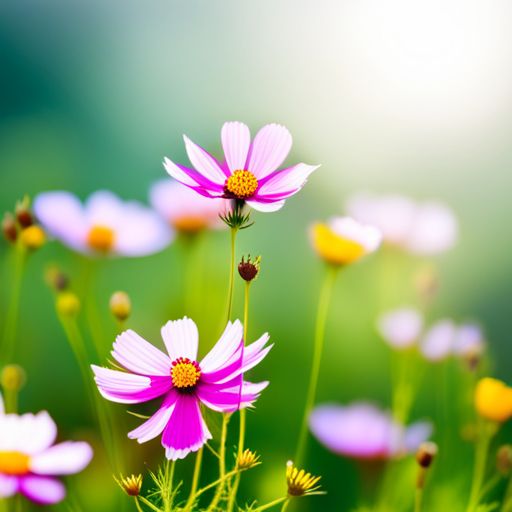
Cosmos flowers paint the summer and autumn landscape with a delicate, colorful touch. Making them a favorite among gardeners and flower enthusiasts. Their easygoing nature and beautiful displays have earned them a special place in flower gardens. If you’re looking to add a splash of carefree beauty to your garden. Then learning how to grow cosmos is well worth learning. From soil preparation to understanding their light and water requirements, let’s dive into how to grow Cosmos in your garden.
Sunlight Requirements
Cosmos thrive under the full gaze of the sun, requiring at least 6-8 hours of direct sunlight each day. This full sun exposure is crucial for them to develop their signature vibrant blooms. While they can tolerate partial shade, the flowers will be fewer and the stems weaker. For optimal flower production, position your cosmos in a spot where they can bask in unfiltered sunlight throughout the day.
Soil Preparation
Successful cosmos cultivation begins with proper soil preparation. These flowers prefer well-draining soil with moderate fertility. Rich or heavy soils can result in lush foliage at the expense of bloom production. To prepare your garden bed, incorporate a few inches of organic compost into the topsoil. This will improve the soil structure and drainage. If dealing with particularly heavy clay soil. Consider raising your garden beds or adding sand and organic matter to enhance drainage. Cosmos are not heavy feeders, so overly enriching the soil with fertilizer is not necessary and can inhibit their flourishing.
How Do You Plant Cosmos
When planting cosmos, you have the option to start with seeds or nursery plants.
When to Plant Cosmo Seeds
For seeds, begin sowing directly into your prepared garden soil after all danger of frost has passed and the soil is warm. Scatter the seeds thinly over the soil surface. And lightly cover them with no more than 1/4 inch of soil, as cosmos seeds need some light to germinate effectively. Water the area gently and maintain even moisture until the seeds sprout, which typically takes about 7-10 days. Thin the seedlings once they’re a few inches tall. Spacing the seedlings about 12 to 18 inches apart to allow ample room for growth.
How to Plant Cosmo Plants
If you choose nursery cosmos plants. Ensure that the risk of frost is behind you before transplanting them into your garden. Dig a hole for each plant that is slightly larger than the root ball. And space the holes around 12 to 18 inches apart to give each plant plenty of space to grow. Gently remove the plant from its container, loosening the roots if they are packed tightly. Place the plant in the hole at the same depth it was growing in the container. Then backfill with soil, and water thoroughly. Nursery plants can offer a head start and a quicker route to a blooming garden.
Water and Fertilizer Needs
Cosmos have moderate water requirements and are somewhat drought tolerant once established. Water them regularly after planting until they are well-rooted and showing signs of growth. Once mature, they will only need watering during prolonged dry spells. It’s important to water at the base of the plants to prevent fungal diseases that can be promoted by moisture on the leaves. Overwatering should be avoided, as it can lead to root rot or weak plants.
Fertilization is typically unnecessary for cosmos, as they are accustomed to growing in less fertile soils. Too much fertilizer can cause an abundance of foliage with fewer blooms. If your soil is extremely poor, a light application of a balanced, slow-release fertilizer at the beginning of the growing season can provide sufficient nutrients. If you chose to fertilize, do so sparingly and aim for a formulation that’s low in nitrogen, which can minimize blooming if used in excess.
How Tall Do Cosmos Grow
Cosmos are known for their impressive and versatile height, which can range anywhere from 18 inches to 6 feet tall, depending on the variety. Dwarf varieties like Cosmos ‘Sonata Series’ will stay at the shorter end of the spectrum, making them ideal for container planting or front-of-border positioning. On the other hand, the classic Cosmos bipinnatus can reach towering heights and is perfect for creating a backdrop in the garden or filling in mid-border spots with a burst of color. When planting, remember to consider the mature height of your chosen variety to ensure it fits well within your garden design and doesn’t overshadow shorter companions.
Benefits of Cosmos in Your Garden
Cosmos not only add aesthetic value to a garden with their vibrant flowers and feathery foliage but they also contribute to the ecosystem. These flowers attract a variety of pollinators, including bees, butterflies, and birds, which are essential for the pollination of many plants and the health of your garden. Moreover, cosmos are known for their ability to thrive in poor soil conditions where other flowers may struggle, making them an ideal choice for gardeners looking to beautify less-than-ideal spots. They also have an exceptional ability to self-seed, providing a sense of continuity in your garden from one season to the next, with minimal effort on your part. Easy to grow and maintain, cosmos offer a low-maintenance option for adding long-lasting color and life to your garden space.
Happy Gardening!
Growing cosmos in your flower garden is an opportunity to add an untamed elegance that captures the essence of a wild summer meadow. With a bit of preparation, attention to their needs, and a touch of your own love, your cosmos garden will be a beacon of beauty in your home landscape.
Embark on this cosmic growing journey and witness the simple, yet everlasting charm that cosmos bring. As you sow and tend, remember you’re not just growing flowers; you’re growing a snapshot of the boundless natural world that we all cherish. So go ahead and introduce this interstellar beauty to your garden.
Please be sure to check out my Gardening Blog Post Page for more tips on all types of gardening. Including Seed Starting, Orchids, Water Gardening, Coldframe Gardening, Indoor Bulb Gardening, Hydroponics, Container Gardening, Mums, Herbs, African Violets, planting Bulbs, Flower Gardening, Vegetable and Fruit Gardening, Indoor Houseplants of all kinds, Cactus, Succulents, Hanging plants, Deer resistant plants and even Bird, Bee, Butterfly and Hummingbird Gardens!