
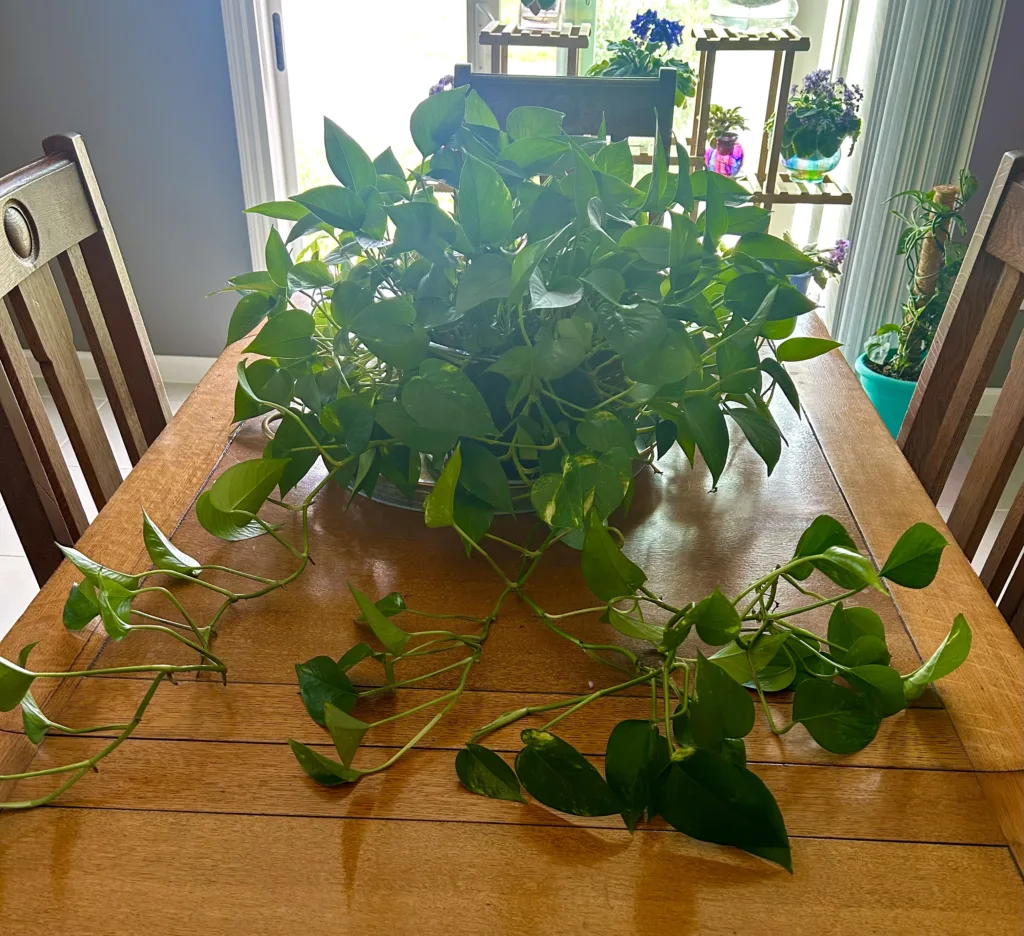
Have you ever seen a beautiful plant and weren’t sure if it was a philodendron or pothos? These two plants are often confused for one another due to their similar leaf shapes and growth habits. However, there are key differences between the two that can help you identify which one you have. In this post, we’ll explore the differences between philodendron and pothos, so you can confidently identify and care for your plants.
Different Node Type
One of the most definitive ways to distinguish between Philodendron and Pothos is by examining their nodes. The small bumps along the stem where leaves attach. In Philodendrons, the nodes are smooth and flush with the stem, almost inconspicuous. They also have sheaths which remain on the stem and accumulate as the plant grows, adding to the plant’s characteristic look.
On the other hand, Pothos’ nodes are more distinct and protrude from the stem, creating a knobby appearance. They do not retain sheaths like Philodendrons do. This difference in node type, although small, is a reliable indicator when identifying these two popular houseplants.
Differences in Leaf Shape, Color, and Texture
Another distinguishing factor between Philodendron and Pothos plants is the variation in leaf shape, color, and texture. Philodendron leaves are typically large, heart-shaped, and a rich, deep green color. The leaf texture is smooth with pronounced veins, contributing to a lush, tropical feel.
In contrast, Pothos leaves are more streamlined and can have variations in color. They often display a mixture of green, yellow, and even white in a marbled pattern, which adds to their appeal as decorative indoor plants. The texture of Pothos leaves is slightly waxy, with less apparent vein structure compared to Philodendron leaves. This comparison in leaf characteristics provides another way to correctly identify whether you have a Philodendron or Pothos plant.
Growth Habit
Philodendron and Pothos also exhibit different growth habits which can aid in their identification. Philodendrons are known for their ability to climb. With the help of aerial roots, they can attach themselves to surfaces, climbing up walls and along trellises. This climbing nature gives Philodendrons versatility in terms of placement and allows them to add a vertical element to indoor plant displays.
Pothos, while also a vining plant, typically display a more trailing growth habit. They are popular choices for hanging baskets where their cascading vines can be beautifully showcased. The leaves on a Pothos tend to grow closer together, creating a fuller appearance along the length of the vine. Understanding the distinct growth habits of these plants is yet another tool to help differentiate between a Philodendron and a Pothos plant.
Toxicity
Both Philodendron and Pothos plants contain calcium oxalate crystals, making them potentially toxic to pets and humans if ingested. In humans, the ingestion of these plants may cause a sensation of burning in the mouth and throat, accompanied by difficulty swallowing, nausea, and vomiting. For pets, symptoms may include excessive drooling, pawing at the mouth, vomiting, and reduced appetite.
If you have pets or young children in your household, it’s crucial to place these plants out of reach or consider other non-toxic alternatives. If exposure or ingestion occurs, it’s advised to seek immediate medical or veterinary attention. Despite their potential toxicity, with proper handling and placement, both Philodendrons and Pothos can safely be enjoyed as part of your indoor plant collection.
While both plants are considered toxic to pets and humans if ingested, philodendrons are more toxic than pothos. Philodendrons contain high levels of calcium oxalate crystals, which can cause severe irritation and swelling of the mouth, tongue, and throat if ingested. Pothos, while still toxic, are less likely to cause severe reactions.
Happy Gardening!
In conclusion, philodendrons and pothos may look similar at first glance, but there are key differences between them that can help you identify which one you have. By paying attention to leaf shape, growth habit, leaf color and texture, and toxicity, you can confidently care for your plants and avoid any potential health risks. So whether you have a philodendron or pothos in your home, take some time to appreciate their unique differences and beauty.
Please be sure to check out my Gardening Blog Post Page for more tips on all types of gardening. Including Coldframe Gardening, Indoor Bulb Gardening, Hydroponic Gardening, Container Gardening, Mums, Herbs, African Violets, planting Bulbs, Flower Gardening, Vegetable and Fruit Gardening, Indoor Houseplants of all kinds, Cactus, Succulents, Hanging plants, Deer resistant plants and even Bird, Bee, Butterfly and Hummingbird Gardens!