
As a gardener, I always gravitate towards beautiful, easy to care for plants, and Golden Pothos fulfills all those criteria. Also known as Devil’s Ivy, Golden Pothos is a trailing vine that is known for its striking, golden yellow leaves that effortlessly complement any room. Golden Pothos is a great starter plant for anyone who wants to bring greenery into their homes but does not have much gardening experience or a green thumb. It’s a low maintenance, air-purifying plant that requires minimal care and attention. In this blog post, I’ll be sharing how to take care of Golden Pothos plant.
Best Pot for Golden Pothos
When choosing a pot for your Golden Pothos, it’s crucial to consider both aesthetics and functionality. Terracotta pots are an excellent choice for beginners due to their porous nature, which allows the roots to breathe and helps prevent over-watering. These pots also have a classic look that nicely complements the golden yellow leaves of the Golden Pothos. The pot should have sufficient drainage holes to let excess water escape, preventing root rot. As for size, choose a pot that is just slightly larger than the root ball of the plant. This ensures that the plant has enough room to grow, but not so much that it drowns in soil. Remember, Golden Pothos is a flexible plant that adapts well to various environments, so don’t stress too much about getting the “perfect” pot. It’s more about providing a comfortable home for your plant where it can thrive and beautify your space.
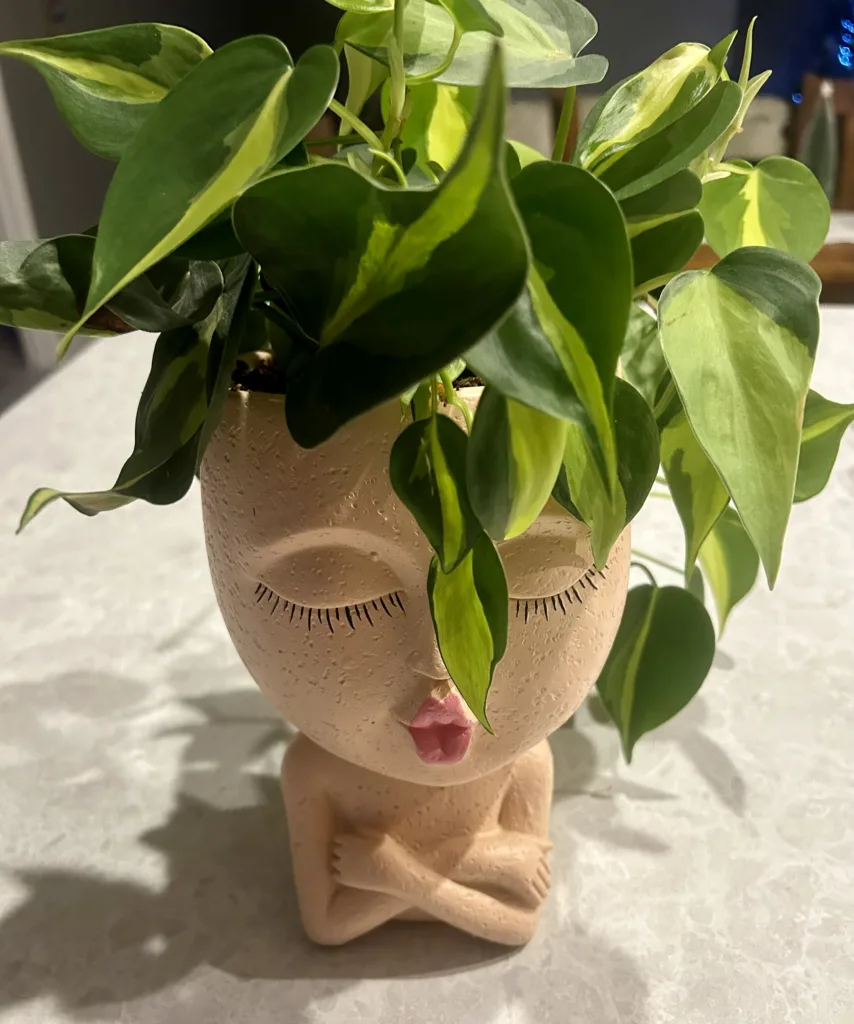
As you can see by my picture above of my golden pothos it does wonderful in the pot head planter. I get remarks from everyone about how unique it is!!
Soil Mix for Golden Pothos
Golden Pothos prefers well-draining soil to avoid waterlogged conditions that can lead to root rot. A well-balanced, general-purpose houseplant soil mix works well for this plant. If you want to make your own mix, combine two parts peat moss with one part perlite or coarse sand. This mixture will provide the right balance of drainage and water retention, ensuring your Pothos has the ideal growing conditions. Always make sure that the soil is relatively dry before watering again. Golden Pothos is more tolerant of underwatering than overwatering, so it’s crucial to get the soil mix right to promote a healthy and thriving plant.
Golden Pothos Light
This Pothos is highly adaptable and can thrive under a variety of light conditions, making it suitable for almost any indoor environment. However, for optimal growth and health, it prefers bright, indirect light. Exposure to direct sunlight can scorch the leaves, causing them to lose their vibrant color and turn brown. On the other hand, very low light conditions can slow the plant’s growth and cause the variegation to fade. If you notice the leaves becoming too green or growth slowing significantly, this could be a sign that the plant needs more light. Remember, Golden Pothos is flexible and forgiving, so don’t worry if you can’t offer the perfect lighting conditions. Just strive for a balance that keeps your plant healthy and happy.
Water and Fertilizer for Golden Pothos
Golden Pothos doesn’t require a strict watering schedule, but it’s generally recommended to water it when the top inch of soil feels dry to touch. Overwatering can lead to root rot which is one of the main reasons for plant death. Water thoroughly until it drains out of the pot, but make sure not to leave the plant sitting in water.
As for fertilizing, Golden Pothos isn’t a heavy feeder but appreciates a boost during the growing season. Use a balanced, water-soluble houseplant fertilizer and apply it every two to three months during spring and summer. This will provide the necessary nutrients for the plant to thrive. In fall and winter, when the plant’s growth slows, you can cut back on fertilizing. Remember, it’s always better to under-fertilize than over-fertilize, as too much can lead to salt buildup in the soil which can damage the plant’s roots.
By following these watering and fertilizing tips, you can ensure your Golden Pothos stays healthy and vibrant, adding a splash of color and life to your indoor spaces.
Propagating Golden Pothos
One of the many exciting aspects of Golden Pothos is its ease of propagation. You can propagate it in both water and soil, allowing you to multiply your green family effortlessly.
Propagating Golden Pothos in Water
Propagating Golden Pothos in water is a straightforward process. Simply cut a 4-6 inch long stem from the parent plant just below a node (the area where the leaf meets the stem). Make sure the cutting has at least 4 leaves. Remove the leaf closest to the cut end, place the stem in a propagation station filled with room temperature tap water, ensuring that the node is submerged but the leaf is not in the water. Place in a well-lit area, but away from direct sunlight. Change the water every 1-2 weeks, or if it becomes cloudy. In a few weeks, you will see white roots sprouting from the submerged node. Once the roots are a few inches long, transfer the cutting to a pot filled with soil, or you can leave it growing in water if you prefer.
Propagating Golden Pothos in Soil
For soil propagation, follow the same process of cutting a stem, but instead of placing it in water, plant the cutting directly into a pot filled with well-draining soil mix. Ensure the node is buried in the soil. Place the pot in a warm, well-lit area, but away from direct sunlight. Keep the soil consistently moist but not waterlogged. In a few weeks, your cutting will establish itself into a new Pothos plant.
Whichever method you choose, propagating Golden Pothos is a rewarding and fun process. It’s an excellent way to expand your indoor garden and share plant cuttings with friends and fellow plant enthusiasts. Remember, propagation also rejuvenates the parent plant by encouraging new growth, so it’s a win-win situation!
How to Grow Golden Pothos in Water
Golden Pothos can be successfully grown in water, making it a versatile plant that can be adapted to hydroponics or kept as a water plant in a decorative vase. When growing Golden Pothos in water, it’s recommended to begin with a cutting propagated in water, as was outlined in the previous section.
To continue growing your Pothos in water, transfer your rooted cutting into a jar, vase, or bottle filled with clean water. Make sure the roots are well submerged but the leaves remain above the water surface. It’s important to use a container that is transparent, as this allows for sunlight to reach the roots, aiding in photosynthesis.
Position your water-grown Pothos in a location where it can receive bright, indirect light. Direct sunlight can cause algae growth in the water, which can hinder the plant’s growth.
Ensure the water is changed every two weeks, or when it appears cloudy, to prevent the accumulation of bacteria or fungi. When changing the water, gently rinse the roots under tepid running water to remove any potential buildup.
Unlike soil-grown Pothos, water-grown Pothos needs supplemental nutrients to thrive, as water alone won’t provide all the necessary nutrients. Use a water-soluble houseplant fertilizer diluted to half the recommended strength. Feed your Pothos every two to three months during spring and summer, when the plant is in its active growth phase.
Remember, patience is key. Golden Pothos grows slower in water than in soil, but with the right care and conditions, you can have a lush, trailing vine adding a touch of green to your space.
Happy Gardening!
Golden Pothos is an easy-to-care-for plant that can add a touch of greenery to any room. With its bright yellow leaves and air-purifying qualities, it’s easy to understand why this plant is so popular. To make sure that your Golden Pothos thrives, ensure that you provide it with the right growing environment of adequate light, well-draining soil, and minimal attention. With these simple tips, you’ll have a happy, healthy Golden Pothos in no time.
Please be sure to check out my Gardening Blog Post page for more tips on all types of gardening. Including Coldframe Gardening, Indoor Bulb Gardening, Hydroponic Gardening, Container Gardening, Mums, Herbs, African Violets, planting Bulbs, Flower Gardening, Vegetable and Fruit Gardening, Indoor Houseplants of all kinds, Cactus, Succulents, Hanging plants, Deer resistant plants and even Bird, Bee, Butterfly and Hummingbird Gardens!