
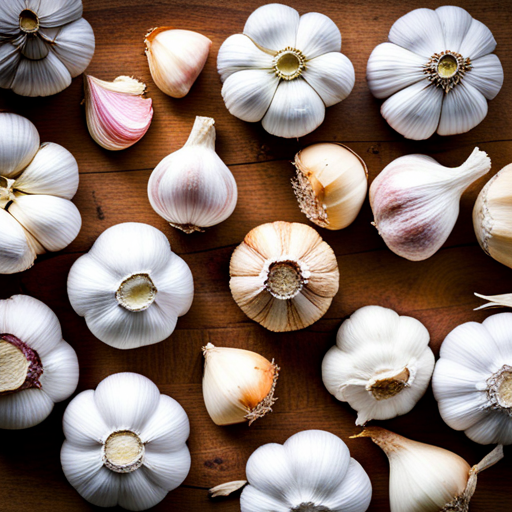
Garlic is an essential part of my daily life, adding flavor and aroma to our salads and dishes. But do you know that there are many unique types of garlic that you can grow in your garden? In this blog post, we’ll discuss a unique garlic variety list of 10 types and how to grow them. These garlic types differ in taste, size, shape, and color, but what they all have in common is the health benefits and the fact that they can be grown at home. So, let’s get started and explore all these exciting garlic types!
Spanish Rojo Garlic
The Spanish Rojo garlic is a favorite among growers due to its robust flavor and large, easy-to-peel cloves. Known for its classic garlic spicy flavor, it’s one of the best varieties to add a punch to your meals. Spanish Rojo thrives in colder climates and is particularly well-suited to zones 2-9. This type of garlic is characterized by its large bulbs, which contain about 8-12 large, red-skinned cloves.
Spanish Rojo prefers a well-draining, loamy soil with a pH between 6 and 7. Before planting, enrich your soil with organic matter to ensure health growth.
Plant in the fall, about 3 weeks before the first hard freeze is expected. Plant each clove about 2 inches deep and 4 inches apart.
Spanish Rojo garlic is typically ready to harvest in mid-summer when the lower leaves start to brown. After harvesting, let the bulbs dry in a well-ventilated, shady spot for about two weeks. Once they’re dry, trim the roots, and store them in a cool, dry place. They can last up to 6 months when stored properly.
Music Garlic
Music garlic stands out due to its impressive size – its bulbs are often twice as large as other varieties. This hard-neck garlic variety has a sweet, mild flavor when cooked, and a robust, spicy taste when consumed raw. Music garlic is particularly suited to zones 3 to 8, demonstrating excellent cold hardiness.
Music garlic prefers well-draining soil, and adding organic matter or compost can enrich its nutritional profile. A soil pH of around 6 to 7 is ideal for this garlic variety.
Plant Music garlic in the fall, around the time of your first expected frost. Each clove should be spaced around 6 inches apart, and planted 2 to 3 inches deep.
Harvest typically happens in the summer, usually when the bottom third of the leaves turn brown. Once harvested, dry the bulbs in a cool, shady, and well-ventilated area for about two weeks. After drying, trim the roots and store in a cool, dry place. With proper storage, Music garlic can last up to 9 months.
Georgian Crystal Garlic
Georgian Crystal garlic is a hardneck variety that’s a favorite for its mild, buttery flavor. It’s often praised for its large cloves which are easy to peel, making it a fantastic option for cooking. The bulbs are white with a slight sheen, living up to the ‘crystal’ in its name. This garlic type is especially suitable for zones 4 to 9, showing notable resistance to cold conditions.
For soil preparation, Georgian Crystal garlic thrives in well-draining soil. Incorporating organic compost into the soil can enhance the nutrient content and promote healthy growth. A soil pH of around 6 to 7 is preferred for this garlic variety.
Planting should ideally take place in the fall, about 2 to 3 weeks before the first hard frost. Cloves should be planted 2 to 3 inches deep and 6 inches apart, ensuring plenty of room for growth.
Harvest time for Georgian Crystal garlic typically falls in mid to late summer, usually when half of the leaves have turned yellow. After harvesting, allow the bulbs to dry in a cool, well-ventilated, and shaded area for approximately two weeks. Once the bulbs are dry, trim the roots and store them in a cool, dry place. Properly stored Georgian Crystal garlic can last up to 5 to 6 months.
Chinese Pink Garlic
Chinese Pink Garlic is a standout variety, renowned for its early maturity and the beautiful pink hue of its skin. It boasts a rich, full-bodied flavor that makes it a dynamic addition to any dish. This hard-neck garlic variety is suitable for zones 3 to 9, showing great adaptability to varying temperatures.
Chinese Pink Garlic prefers well-drained loamy soil for optimal growth. Prior to planting, it’s recommended to add organic compost to your soil to improve its nutrient content. This garlic variety thrives in a soil pH of around 6 to 7.
Planting is best done in the fall, usually 2 to 3 weeks before the first expected frost. You should plant each clove about 1 to 2 inches deep and space them about 4 inches apart to ensure adequate room for growth.
Harvest time for Chinese Pink Garlic typically occurs in early summer, usually once the lower leaves begin to turn brown. After harvesting, the bulbs should be allowed to dry in a cool, shady, and well-ventilated area for about two weeks. Once they are dry, trim the roots and store the bulbs in a cool, dry place. When properly stored, Chinese Pink Garlic can be kept for up to 4 to 5 months.
Purple Glazer Garlic
Purple Glazer Garlic is a unique hardneck variety, admired for its vibrant purplish-red clove wrappers and robust flavor. The garlic is known for its strong, but not overpowering, taste, making it an excellent choice for culinary uses. It is particularly well-suited to zones 4 to 9, demonstrating good resistance to varying weather conditions.
Purple Glazer Garlic prefers well-draining soil, and the addition of organic compost to the soil can help improve its nutrient content. This variety thrives in soil with a pH range of around 6 to 7.
Planting should ideally take place in the fall, around 2 to 3 weeks before the first hard frost. Plant each clove 2 inches deep and space them about 4 inches apart, ensuring they have ample room for growth.
Harvest time for Purple Glazer Garlic typically falls in mid to late summer, when half of the leaves have started to yellow. After harvesting, allow the bulbs to dry in a cool, well-ventilated, shaded area for approximately two weeks. Once dry, trim the roots and store them in a cool, dry place. When stored properly, Purple Glazer Garlic can last up to 6 months.
Tzan Garlic
Tzan Garlic, a hardneck variety originating from China, is cherished for its strong, spicy flavor that mellows and sweetens when cooked. It is known for its large bulbs that contain 6 to 8 large cloves, each clove surrounded by a thick, easy-to-peel skin. Tzan Garlic is suitable for zones 5 to 9, proving highly adaptable to different weather conditions.
This garlic variety requires well-draining, fertile soil for optimal growth. The incorporation of organic compost into the soil can significantly enhance the nutrient content, contributing to healthier growth. Tzan Garlic prefers a soil pH of approximately 6 to 8.
For planting, it is best to plant Tzan Garlic in the fall, generally about 3 weeks before the first hard frost. Each clove should be planted 2 to 3 inches deep and spaced about 4 to 6 inches apart, allowing sufficient room for bulb development.
The harvest of Tzan Garlic usually happens in mid to late summer, often when the lower leaves begin to turn brown. Post-harvest, the bulbs should be allowed to dry in a cool, shaded, and well-ventilated area for roughly two weeks. After drying, trim the roots and store the bulbs in a cool, dry place. Properly stored Tzan Garlic can last up to 5 to 6 months.
Red Janice Garlic
Red Janice Garlic is an exceptional hardneck variety, renowned for its beautiful red clove wrappers and a robust, full-bodied flavor. It’s characterized by its large bulbs and easy-to-peel cloves, making it a favorite among cooking enthusiasts. Suitable for zones 5 to 9, Red Janice Garlic shows remarkable resilience to varying weather conditions.
Red Janice Garlic thrives in well-drained, fertile soil. To prepare the soil, it’s advisable to mix in organic compost, which enhances the nutrient content and promotes robust growth. The soil pH should ideally lie in the range of 6 to 7.
Planting Red Janice Garlic is best done in the fall, usually 3 weeks before the first hard frost. Cloves should be planted 2 to 3 inches deep and spaced about 6 inches apart, ensuring ample room for growth.
Harvest time for Red Janice Garlic typically falls in mid to late summer, generally when half the leaves have turned yellow. After harvesting, the bulbs should be dried in a cool, shaded, and well-ventilated area for roughly two weeks. Once dry, trim the roots and store the bulbs in a cool, dry place. With appropriate storage, Red Janice Garlic can last up to 5 to 6 months.
Kettle River Giant Garlic
Kettle River Giant Garlic is an impressive hardneck variety, known for its enormous bulbs that can produce up to 12 large cloves. It has a mild, yet full bodied flavor that makes it an excellent choice for those who prefer a less pungent garlic. This variety is suitable for growing in zones 5 to 9, having shown great adaptability to various weather conditions.
For optimal growth, Kettle River Giant Garlic requires well-draining, fertile soil. It is advisable to incorporate organic compost into the soil before planting to enhance its nutrient content. This garlic variety thrives in soil with a pH range of 6 to 7.
Planting Kettle River Giant Garlic is best done in the fall, typically about 3 weeks before the first hard frost is expected. Each clove should be planted 2 to 3 inches deep and spaced about 6 inches apart, ensuring enough space for the development of the large bulbs.
Harvesting should occur in mid to late summer, usually when half of the leaves have started to turn yellow. Following harvest, allow the bulbs to dry in a cool, well-ventilated, shaded area for approximately two weeks. After they are dry, trim the roots and store the bulbs in a cool, dry place. When stored properly, Kettle River Giant Garlic can last up to 5 to 6 months.
Sicilian Gold Garlic
Sicilian Gold Garlic is a distinct hardneck garlic variety, known for its large bulbs and golden clove wrappers. It is appreciated for its rich, aromatic flavor that adds depth to a variety of dishes. Sicilian Gold Garlic is highly adaptable and grows well in zones 5 through 9, making it a resilient option for a range of climates.
In terms of soil preparation, Sicilian Gold Garlic thrives in well-draining, fertile soil. To enrich the soil, it is recommended to incorporate organic compost prior to planting, which enhances the nutrient content and supports healthier growth. The garlic variety prefers a soil pH of about 6 to 7.
Planting Sicilian Gold Garlic should ideally be done in the fall, around 3 weeks before the first hard frost. Each clove should be planted 2 to 3 inches deep and spaced approximately 4 to 6 inches apart to allow ample room for bulb development.
The harvest season for Sicilian Gold Garlic typically arrives in mid to late summer, commonly when half of the leaves have begun to yellow. After harvesting, let the bulbs dry in a cool, shaded, and well-ventilated area for about two weeks. Once dry, trim the roots and store the bulbs in a cool, dry place. If stored correctly, Sicilian Gold Garlic can be kept for up to 5 to 6 months.
Inchelium Garlic
Inchelium Garlic is a charismatic softneck variety, lauded for its mild yet flavorful taste that gets better with storage. This garlic is noted for its large bulbs that house numerous small to medium-sized cloves. A versatile plant, Inchelium Garlic is well-suited for zones 5 to 9, demonstrating commendable adaptability to varying weather conditions.
For optimal growth, Inchelium Garlic prefers well-draining, fertile soil. As part of soil preparation, it is wise to incorporate organic compost, which enriches the soil with nutrients and promotes healthier plant growth. The preferred soil pH for this garlic variety is around 6 to 7.
The planting of Inchelium Garlic is in the fall, typically about 3 weeks before the first hard frost. Cloves should be sown 2 to 3 inches deep and spaced about 4 to 6 inches apart, providing enough room for bulb development.
Harvesting of Inchelium Garlic usually takes place in mid to late summer when half of the leaves turn yellow. Post-harvest, bulbs should be left to dry in a cool, shaded, and well-ventilated area for approximately two weeks. Once dry, trim the roots off and store the bulbs in a cool, dry location. When stored appropriately, Inchelium Garlic has an exceptional shelf life of 6 to 9 months.
Happy Gardening!
Garlic is one of the most widely used spices, and it’s no wonder that you might think you know everything about it. But, this list of 10 unique types of garlic will widen your knowledge of the distinct garlic varieties and provide you many options for your garden. Growing garlic is a beautiful, rewarding experience that yields natural, delicious, and healthy food ingredient – a must-have in every home gardener’s backyard. So, which garlic type intrigued you the most?
Please be sure to check out my Gardening Blog Post page for more growing tips on Container Gardening, Mums, Herbs, African Violets, bulbs and how to plant them, Flower Gardening, Vegetable and Fruit Gardening, Indoor Houseplants of all kinds, Cactus, Succulents, Hanging plants, Deer resistant plants and even Bird, Bee, Butterfly and Hummingbird Gardens!