

Peonies are some of the most beautiful flowers in the garden, and they’re not particularly hard to grow. With the right soil, water, light, and fertilizer, you’ll be able to grow a garden full of these gorgeous flowers. In this post, I’ll be sharing tips on how to grow peonies successfully. My husband’s Grandmother had a yard full of peonies, they were her border all around her yard and so beautiful during blooming.
Zone Types of Peonies
Peonies aren’t just beautiful, they’re also quite hardy and able to thrive in a range of climates, from USDA Hardiness Zones 3 to 8. These perennial plants actually need cold winter temperatures in order to bloom, which is why they do so well in cooler climates. They’re not great fans of excessive heat, particularly humid conditions, so if you’re in a warmer region, choose your peony variety carefully. Some types of peonies, such as garden peonies and tree peonies, have slightly different zone preferences, so always check the specific variety’s needs before planting. Remember, knowing your zone and selecting the right type of peony for that zone is a key step in growing a thriving peony garden.
Preparing the Soil
Just as important as selecting the proper peony for your zone is preparing the soil in which it will grow. Peonies prefer a rich, well-draining soil with a neutral to slightly acidic pH. Begin by testing your soil’s pH level; it should ideally be between 6.0 and 7.0. If your soil is too acidic, you can add garden lime to raise the pH. Conversely, if the soil is too alkaline, adding sulfur or organic compost can lower the pH.
Next, ensure your soil is well-draining. Poorly draining soil can cause root rot and other plant diseases. If you have clay soil, consider adding some sand or organic compost to improve its texture and drainage.
Lastly, enrich your soil with organic matter like compost or well-rotted manure. This will provide your peonies with the nutrients they need to thrive. Remember, taking the time to properly prepare your soil will greatly improve your chances of growing a successful peony garden.
How to Plant Peonies
Planting peonies properly is critical for their growth and bloom. Begin by choosing a sunny, well-drained location in your garden. Peonies are sun-lovers and need at least six hours of sunlight each day.
Once you’ve chosen the right location, dig a hole that’s wide and deep enough to accommodate the peony’s root system, usually about 2 feet deep and 2 feet wide. Place the peony so that the eyes (small red colored buds) on the tuber are facing upwards and are no more than 2 inches below the soil surface. Planting too deep can prevent your peonies from blooming.
After setting the peony in the hole, backfill the hole with soil, firming it gently around the plant. Water thoroughly to settle the soil around the roots. Remember, peonies are relatively low maintenance but they do need some care during their first year to establish themselves. Don’t worry if they don’t bloom much during the first year, as they are likely focusing on root development. Be patient, and you’ll have gorgeous peonies blooming in your garden for many years to come.
How to Care for Peonies
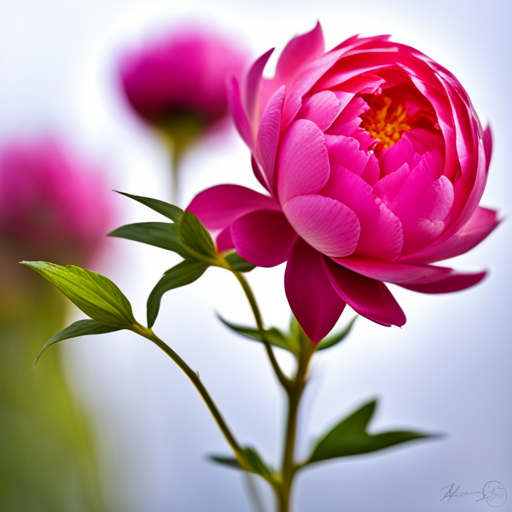
Caring for peonies largely involves regular watering, proper fertilization, and pest control. Peonies are not heavy feeders, so they do not require excessive fertilization. A good rule of thumb is to apply a balanced, slow-release fertilizer in the spring when the plants start to show new growth.
Peonies require consistent watering, especially during dry periods. However, you should ensure to avoid watering over the flowers or foliage as this can lead to fungal infections. If your peonies are newly planted, they may require more frequent watering until they are well-established.
In terms of pest control, peonies are generally disease-resistant. But, they can sometimes be affected by fungal diseases like botrytis blight and powdery mildew, or pests such as thrips and aphids. Regular monitoring and early intervention with a suitable fungicide or pesticide is the best way to keep these issues under control.
Finally, after your peonies have flowered, deadhead the spent blooms to keep the plant looking neat and to encourage more blooms. In colder regions, cut back the foliage to the ground in the fall to remove any diseased material and reduce the chance of diseases carrying over to the next season. With these care tips, your peonies will reward you with beautiful, fragrant blooms year after year.
How to Propagate Peonies
Propagating peonies is a wonderful way to expand your collection or share these beautiful flowers with friends and family. The most common method used for peony propagation is division.
To divide your peonies, begin in the fall, shortly after the first frost. Dig around the peony clump to loosen the soil and carefully lift the clump from the ground with a garden fork, being careful not to damage the roots. Rinse off the soil, and then examine the clump.
Look for the “eyes,” or small pinkish-red buds, on the crown of the plant. Each new division needs to have at least three eyes and good root structure. Using a sharp, clean knife, cut the crown into sections, ensuring each piece has at least three eyes.
Prepare your planting area as you would for a new peony plant, ensuring the soil is well-draining and rich in organic matter. Place your new divisions in the ground with the eyes facing up, and no more than 2 inches beneath the soil surface.
Water the new plants thoroughly and continue to care for them as you would any peony plant. With patience and time, your new peonies should begin to bloom in a couple of years. Remember, propagation through division may seem like a slow process, but the reward of more beautiful peonies is well worth the wait.
How Long do Peonies Bloom?
Peonies are known for their lush, vibrant blooms, but how long do these flowers actually last? The blooming duration of peonies can vary depending on the variety and the growing conditions, but on average, you can expect each peony bush to bloom for approximately 7 to 10 days within a season. However, it’s important to note that not all flowers on a peony plant will bloom at the same time.
This staggered blooming can actually extend the total blooming period of the plant to several weeks. Furthermore, by planting a variety of peonies that have different blooming times (early, mid, and late-season bloomers), you can enjoy peony blooms in your garden for up to 6 weeks.
Remember, while the individual blooms may be short-lived, the green foliage of peonies remains attractive throughout the summer and provides a beautiful backdrop for other flowers in your garden. This, together with their spectacular spring show, makes peonies an appealing option despite their relatively short bloom period.
How Big do Peonies Get?
The size of peonies can vary greatly depending on the variety and growing conditions, but most peony plants will typically reach a height of 2 to 3 feet, and a similar spread. Some tree peony varieties, however, can grow much larger, up to 5 feet tall and wide. It’s important to provide ample space for your peonies to grow and spread, ensuring they are not crowded by other plants. This will not only allow them to reach their full size potential, but also aids in airflow, which can help prevent fungal diseases. Remember, knowing the expected size of your peony plant can help you plan the layout of your garden and position your peonies accordingly.
Different Types of Peonies and Their Features
Peonies are a diverse group of plants with many varieties each offering unique features. Here are some of the most popular types:
- Herbaceous Peonies: Also known as garden peonies, these are the most common type of peonies and are known for their large, fragrant blooms. They die back to the ground each winter and re-emerge each spring, reaching a height of 2 to 4 feet.
- Tree Peonies: Unlike the herbaceous varieties, these are woody shrubs that do not die back to the ground in winter. They grow taller than their herbaceous counterparts, reaching up to 5 feet in height, and are known for their larger, exotic blooms.
- Intersectional Peonies (Itoh Peonies): These hybrids between the herbaceous and tree peonies bring the best of both worlds. They have the large, colorful blooms of tree peonies and the herbaceous peony’s ability to die back in winter.
Each type comes in a wide range of colors, from pure white to deep maroon, and varying bloom types, from single to full double. It’s this diversity that makes peonies a versatile addition to any garden.
Happy Gardening!
Growing peonies is a rewarding and easy experience. With the right soil, water, light, and fertilizer, you can grow a lush garden full of these stunning flowers. Since these plants take several years to establish, they’re great for gardeners who are looking for a long-term investment in their garden. Remember to give them plenty of sunlight, water them wisely, and provide them with the nutrients they need. With the tips outlined above, you will surely not only know how to grow peonies but have beautiful and bountiful peony blooms year after year.
Please be sure to check out my Gardening Blog Post Page for more tips on all types of gardening. Including Seed Saving, Seed Starting, Orchids, Water Gardening, Coldframe Gardening, Indoor Bulb Gardening, Hydroponics, Container Gardening, Mums, Herbs, African Violets, planting Bulbs, Flower Gardening, Vegetable and Fruit Gardening, Indoor Houseplants of all kinds, Cactus, Succulents, Hanging plants, Deer resistant plants and even Bird, Bee, Butterfly and Hummingbird Gardens!