
Philodendron Imperial Green is a beautiful indoor plant with glossy green leaves that are shaped like a heart. These tropical beauties are a great addition to any plant lover’s collection and can add life to any room. While growing and caring for Philodendron may seem like a daunting task, it is actually relatively easy once you know the basics. In this comprehensive guide, we will help you with everything from the right pot and soil type to watering and propagation techniques.
Choosing the right Pot and Soil Type for Imperial Green
Philodendron Imperial Green is a slow-growing plant and does not require frequent repotting. When selecting a pot, go for a size that is one or two inches larger than the current one. The ideal pot material is terracotta, which promotes better airflow and drainage. When it comes to soil type, the Imperial Green prefers well-draining soil with good aeration. A mix of two parts peat moss, one part perlite, and one part coarse sand is ideal.
Light and Water Requirements
Philodendron Imperial Green thrives in bright, indirect light. Direct sunlight can scorch the leaves, and very low light can cause the plant to grow slowly or not at all. If you don’t have the perfect window you can always use an LED grow lights. When it comes to watering, ensure the soil is moist but not waterlogged. Water the plant once a week and let the soil dry out slightly between watering sessions. It is also essential to ensure the plant is not sitting in water. Water the plant from the top and let the water run through the drainage hole in the pot.
Fertilizing your Philodendron
Philodendron Imperial Green generally does not require a lot of fertilizer. However, you can feed them during the growing season (spring and summer) with a balanced liquid fertilizer every four weeks. Reduce feeding in the dormant season (fall and winter).
Propagating Philodendron Imperial Green
Philodendron Imperial Green is relatively easy to propagate, and there are two commonly used methods: stem cuttings and air layering. For stem cuttings, snip a six-inch section just below the node and remove the lower leaves. Put the cutting in water in a propagation station until it develops roots. For air layering, make a small incision on the stem and cover it with soil. Tie the area covered with soil with a plastic wrap and wait for the roots to develop. Once the roots have formed, cut the stem below the root ball and pot the new plant.
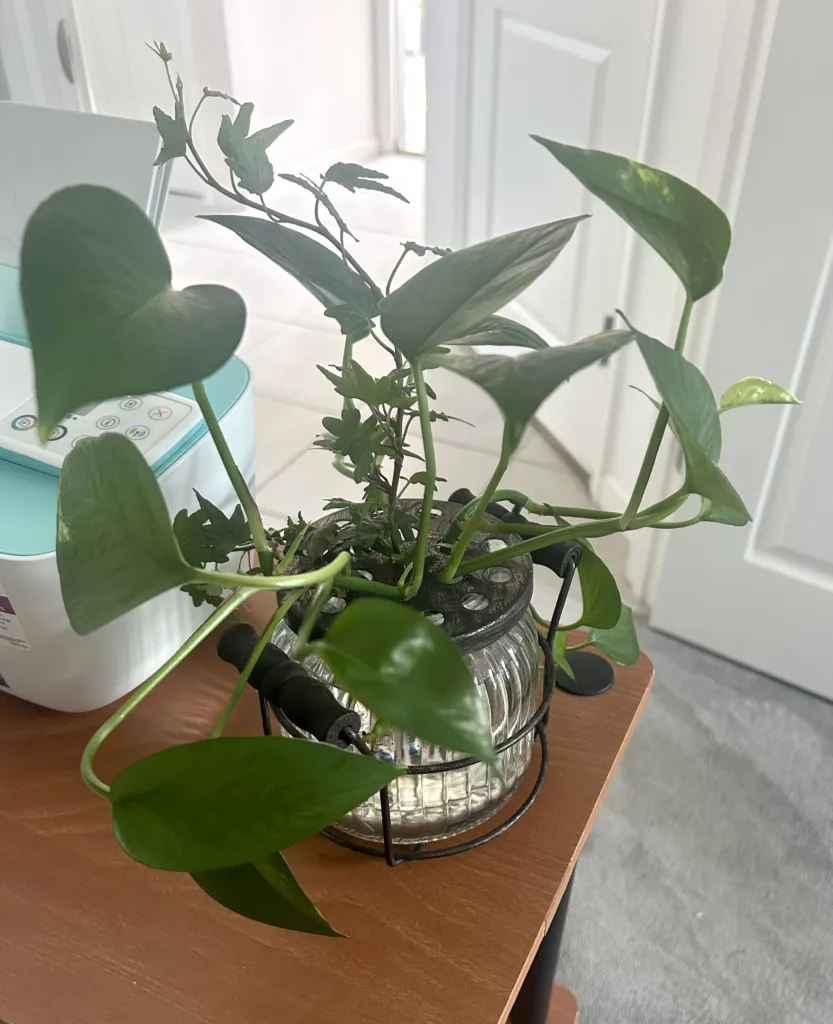
Philodendrons are one many plants that can be grown hydroponically – I have one in my office that is been growing for a few months and love the touch of green to my office!
Happy Gardening!
Philodendron Imperial Green is a low-maintenance indoor plant that is perfect for beginner gardeners. With the right pot and soil type, light and water requirements, and feeding and propagation techniques, you can grow and care for this tropical beauty with ease. Remember, Philodendron Imperial Green is a slow-growing plant, so be patient and watch it grow over time. Good luck!
Please be sure to check out my Gardening Blog Post Page for more tips on all types of gardening. Including Seed Saving, Seed Starting, Orchids, Water Gardening, Coldframe Gardening, Indoor Bulb Gardening, Hydroponics, Container Gardening, Mums, Herbs, African Violets, planting Bulbs, Flower Gardening, Vegetable and Fruit Gardening, Indoor Houseplants of all kinds, Cactus, Succulents, Hanging plants, Deer resistant plants and even Bird, Bee, Butterfly and Hummingbird Gardens!