
Welcome gardeners! Have you ever seen a Sedum burrito or as some know it a Burro’s Tail in all its eye-catching glory and wondered how to recreate it in your own home? Not to worry, we’ve got the answers for you. Growing Sedum burrito in your indoor or outdoor garden is an easy and low-maintenance way to add some life and color to the garden year round. It requires little attention but has big results. In this blog post, you will find out all the basics for burro tail plant care. From soil type, pot type, light requirements, water needs as well as how simple propagation can be. And of course, our pest control measures so that your precious plants remain safe!
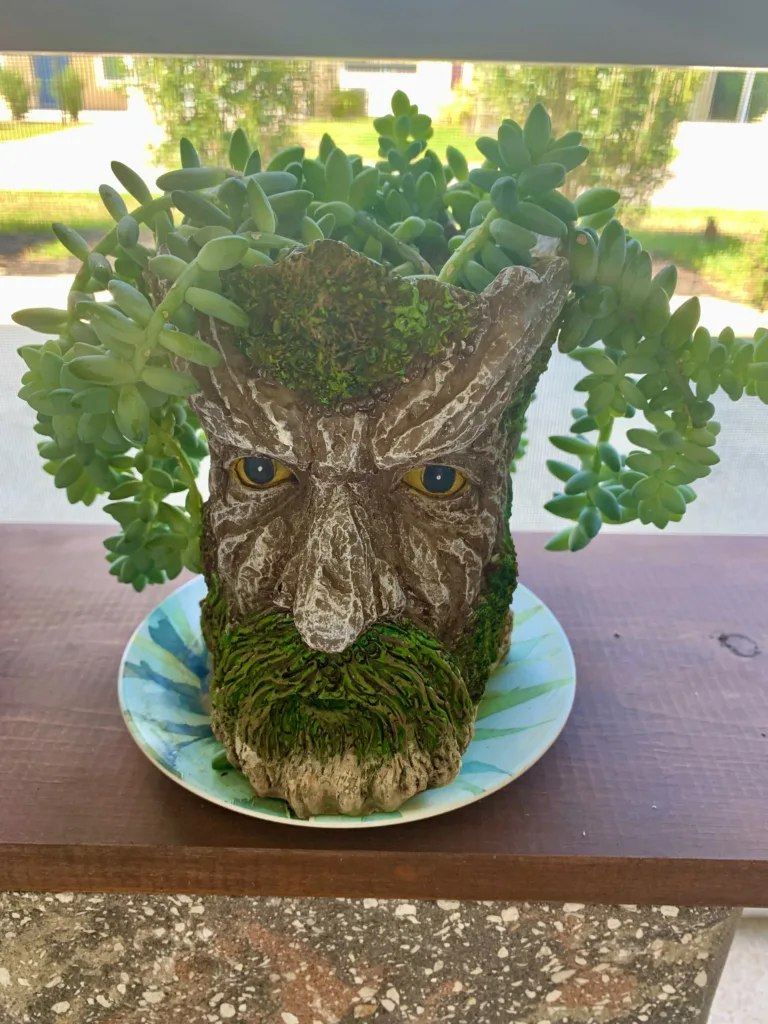
I think this old man planter (as I call it) is perfect for the burro’s tail.
What is a Sedum Burrito or Burro Tail
Sedum Burrito, also known as burro’s tail, is a type of succulent that makes a great addition to your garden. It can be easily recognized by its grayish-green foliage and rosette shape. Each succulent has long, cascading stems and small, paddle-shaped leaves that come together to form a furry-looking “tail”. The plant grows year-round in warmer climates but will die back during winter.
Soil
If you’re looking for the perfect potting soil for your Sedum Burrito, then you’ve come to the right place! A critical factor in its successful establishment and optimal care is selecting the proper potting soil. I love the succulent potting soil for my Burro’s Tail and it seems to love it too! This species prefers a loose, well-draining mix without many organic components (e.g. clay) that can hold onto moisture for too long.
Burro’s Tail pot size and type
It is also important to select an appropriately sized pot with enough drainage holes to avoid over-saturation of roots due to inadequate draining capabilities. Terracotta containers or shallow or any of the pot head planters are ideal choices as they are airy and dry quickly once watered. I have my Burro’s Tail in the Youfui pot, but the Aimebby face pot or Hunthawk pot would also be great and the Sedum Burrito will bring them to life! Tending your Sedum Burrito has never been simpler – just make sure it gets the right pot and soil type to get started!
Watering requirements for the Sedum Burrito
As a succulent, the Sedum Burrito’s water requirements are quite different from those of other plants. The best way to make sure this plant can thrive is to let the soil dry out completely between watering sessions. You should also make sure that you’re only using filtered or distilled water on them. Depending on your home environment, give your Sedum Burrito a good soaking every two to three weeks during the spring and summer months, and reduce it to once a month in fall and winter. When you do water, be generous with it – keeping the pot evenly moist–but never let it sit in standing water as this can cause root rot.
Lighting Requirements
When caring for the Sedum Burrito (also known as Burro’s Tail), setting up proper light is a critically important step. This succulent prefers to receive plenty of bright, natural lighting for most of the day. Such as a few hours of morning sunlight or an east-facing window in your home. If you don’t have access to direct sunlight, artificial light via a grow light installed in the same area can be just as beneficial. Positioning the light about 10” away from the plant is suggested and ensure that it gets at least 8 hours off too (similar to what happens with natural sunlight). Following these lighting tips will ensure that your Sedum Burrito continues to thrive while adding life and greenery to your living space.
Propagating Burro’s Tail
When it comes to the Sedum Burrito, or burro’s tail succulent, one of the best and easiest ways to propagate it is by division. The even better news is that it thrives in a variety of soils, making them a great option for home gardeners who wish to add this aesthetically pleasing succulent to their collection. Division can occur when re-potting or propagating through cuttings as well. When you take a cutting just strip off a few of the petals and stick it down into the soil. I also throw the petals on top of the soil and they will root also!
No matter what technique is chosen, make sure to place the plant in a pot with generous drainage holes and no more than one inch larger in diameter than its current home. Water requirements are minimal, but providing adequate sunlight and following the other care instructions can help ensure the successful propagation of your Sedum Burrito.
Pest control strategies for the Sedum Burrito
For those who are fond of growing the Sedum Burrito, it is important to take note of common pests that may invade the Miniature Succulent. Generally, scale insects and mealybugs are prevalent in succulents so keep an eye out for these particular invaders. To prevent pest infestations, avoid wetting the foliage as much as possible and use a balanced fertilizer to strengthen the plant’s immune system against bug invasions. If infestations do occur, insecticidal soaps and neem oil can be used to kill adult bugs effectively while residual insecticides can be used to keep carper bugs out of potted plants or soil beds. With vigilance and dedication, you may be able to keep your Sedum Burrito well-protected from any potential pest threats!
Enjoy your Burro’s Tail!!
In conclusion, caring for a Sedum Burrito or burro’s tail is an easy and rewarding task. Knowing the soil type requirements, pot size, and types needed to ensure optimal growth, watering requirements, and light needs will ensure that your plant stays happy and healthy. Furthermore, knowing how to propagate the Sedum Burrito through cuttings, division or petals is beneficial in case pests attack. Pest infestations can be prevented through good garden hygiene and practices should be used if one becomes unwelcome. With a proper understanding of these necessary components of your Sedum Burrito care plan, you will have a thriving plant in no time! So why wait? Get a Sedum Burrito for your garden today; you’ll thank yourself later!
Please be sure to check out my Gardening Blog Post Page for more tips on all types of gardening. Including Seed Starting, Orchids, Water Gardening, Coldframe Gardening, Indoor Bulb Gardening, Hydroponics, Container Gardening, Mums, Herbs, African Violets, planting Bulbs, Flower Gardening, Vegetable and Fruit Gardening, Indoor Houseplants of all kinds, Cactus, Succulents, Hanging plants, Deer resistant plants and even Bird, Bee, Butterfly and Hummingbird Gardens!