
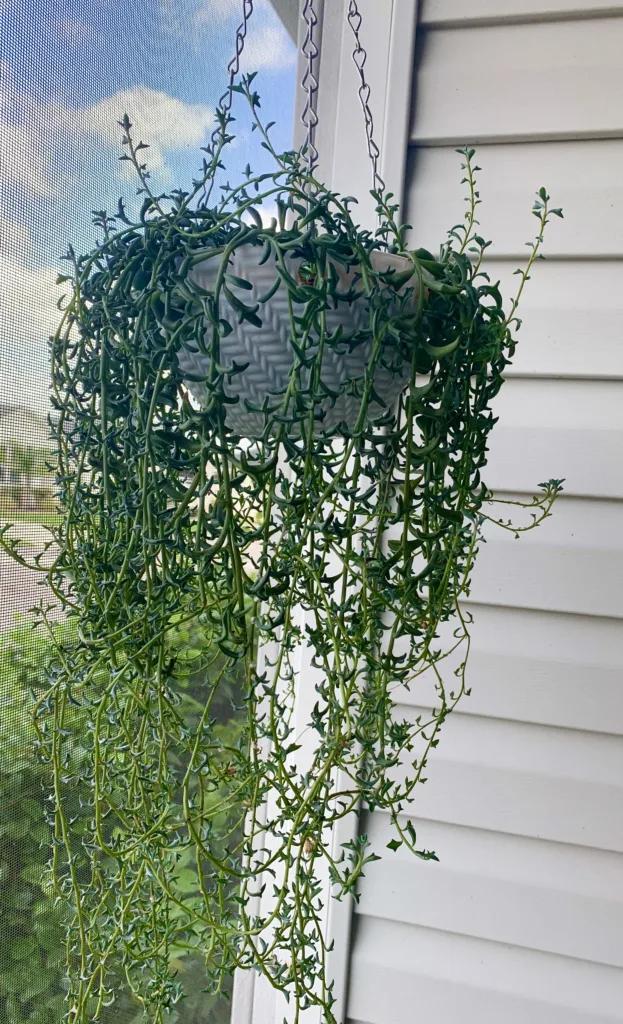
The String of Dolphin succulent is one of the most attractive species of succulents. It is native to South Africa and grows in a trailing form with leaves shaped like dolphins. The leaves are waxy, thick, and silver-green which gives it a unique look. This plant can easily be grown indoors or outdoors and does not require much water or maintenance. When grown outdoors, it can reach up to 3 feet in length. It is also tolerant of a variety of conditions from full sun to shade, drought, or humidity.
The generic name of the string of dolphin succulent is Senecio peregrinus. The word ‘peregrinus’ means “wandering” in Latin. This aptly describes this plant’s growth habit as it trails along like a wandering dolphin. It can be found in many colors such as green, silver-green, and even yellow.
String of Dolphins is not only attractive but also quite resilient making it an ideal choice for novice gardeners. In terms of care, the succulent requires minimal attention. It should be grown in well-draining soil and watered only when the topsoil is completely dry. During the summer months, a diluted liquid fertilizer may be applied to encourage growth. For optimal results, it should be placed in an area with indirect sunlight or partial shade.
Soil Type
The soil should be sandy and well-draining soil. This plant does not tolerate wet conditions and will rot if overwatered. You can use succulent or cactus soil mix for the best results. Do not add extra fertilizer to the soil as it can cause root burn. Also fertilizing too often will lead to an accumulation of salts in the soil.
Choosing the right pot for the string of dolphins.
The size should be wide enough to accommodate the roots of the succulent. A pot with drainage holes is important as it will prevent waterlogging and over-watering. Clay or terracotta pots are ideal for succulents as they allow airflow and help to keep the soil warm in cold climates. Ensure that you select a container that is large enough to give your plant plenty of space to grow. I love this Foraineam pack of hanging pots, I have a string of dolphins in one, string of pearls in another, fishbone cactus in one. An I gave away the other two to my daughter for with string of dolphins and string of pearl starts!!
For best results, the string of dolphins should be repotted once every two years or so.
How to Water String of Dolphins
The succulent requires very little water and should only be watered when the topsoil is completely dry. Over-watering can lead to plant death so it’s important to keep an eye on moisture levels in the soil. To avoid over-watering, allow the soil to become slightly dry before watering again.
How to Propagate String of Dolphins
This is an easy and rewarding process. The succulent can be propagated either through stem cuttings or leaf cuttings. To propagate from stem cuttings, remove a few healthy stems with leaves and place them in moist soil. You can also put the leaf stem in water in a propagation station until roots form and then plant in soil-this is my favorite way. To propagate from a leaf cutting, gently pull off a healthy leaf and place it on top of moist soil. The leaf or stem needs to be completely dry before placing it in the soil. The cuttings should take root within a few weeks and can then be transplanted into their pots.
With proper care and attention, the string of dolphins succulent will continue to thrive year after year. This gorgeous plant adds an elegant touch to any garden or home and is a great choice for beginner gardeners. With minimal maintenance, it can easily bring years of enjoyment.
String of Dolphins Light Requirements
Your string of dolphins succulent needs bright, indirect light to thrive. This type of lighting mimics natural outdoor sunlight and allows the plant to flourish without getting burned from direct exposure. Placing your plant near a window or patio door can provide enough light while keeping it away from direct sun rays. If you place your succulent indoors, using a fluorescent or LED grow light may be beneficial. It is important to keep in mind that too little light can cause the plant to become leggy and weak, so remember to find the perfect balance for your succulent.
Pruning
Pruning is an important part of caring for your string of dolphins succulent, as it encourages healthy new growth and helps maintain the desired shape of your plant. Prune off any dead or damaged leaves and stems with sharp pruning shears, making sure to cut at a 45-degree angle just above where a leaf meets the stem. To shape your plant, remove any stems that are growing too close to each other or in an undesired direction. Be careful not to over-prune as it can cause damage and shock to the plant.
How to Fertilize String of Dolphins
The string of dolphins succulents do not need much fertilizer, but feeding your plant a specialized succulent and cactus fertilizer once or twice a year can be beneficial. This type of fertilizer is usually low in nitrogen to prevent over-stimulating the plant and has a higher level of phosphorus, which encourages healthy growth. Follow label instructions for application and dilution, as too much fertilizer can burn the plant and cause damage.
Pest
The String of Dolphin succulents may be susceptible to pests like mealybugs, scale, and thrips. To get rid of these pests, you can use a cotton ball soaked in rubbing alcohol and apply it directly onto the affected area. If this does not work, consider using an insecticidal soap or neem oil spray. Make sure to follow label instructions for the product you are using, as some can be toxic to pets or humans if not used properly. Additionally, ensure that the plant is well-ventilated and avoid overwatering to prevent a pest infestation from occurring in the first place.
In addition to pests, String of Dolphins succulents may experience fungal diseases such as root rot. Be sure to keep the soil moist but not soggy, as this can cause fungus to grow and spread. If your succulent does develop a fungal issue, you may need to prune off affected areas and treat it with an antifungal solution or neem oil. Make sure to follow instructions for whatever product you are using and to wait until the plant is fully dry before watering again.
Happy Gardening!
By taking these steps, you can better protect your String of Dolphins succulent from pests and fungal diseases, so it can continue to thrive in your home or garden.
By following these tips, you can ensure that your string of dolphin succulent is properly cared for and continue to thrive in its environment. With a little love and attention, this gorgeous specimen will be sure to bring years of joy and beauty to your home or garden.
Overall, String of Dolphins is an eye-catching and easy-to-maintain succulent that will bring a unique look to any garden or home. It requires minimal maintenance and can easily handle different climatic conditions making it an ideal choice for beginner gardeners. Its elegant foliage and trailing form make it suitable for both indoor and outdoor settings, thus providing years of enjoyment. With proper care, this plant can easily thrive in any environment.
Please be sure to check out my Gardening Blog Post Page for more tips on all types of gardening. Including Seed Starting, Orchids, Water Gardening, Coldframe Gardening, Indoor Bulb Gardening, Hydroponics, Container Gardening, Mums, Herbs, African Violets, planting Bulbs, Flower Gardening, Vegetable and Fruit Gardening, Indoor Houseplants of all kinds, Cactus, Succulents, Hanging plants, Deer resistant plants and even Bird, Bee, Butterfly and Hummingbird Gardens!